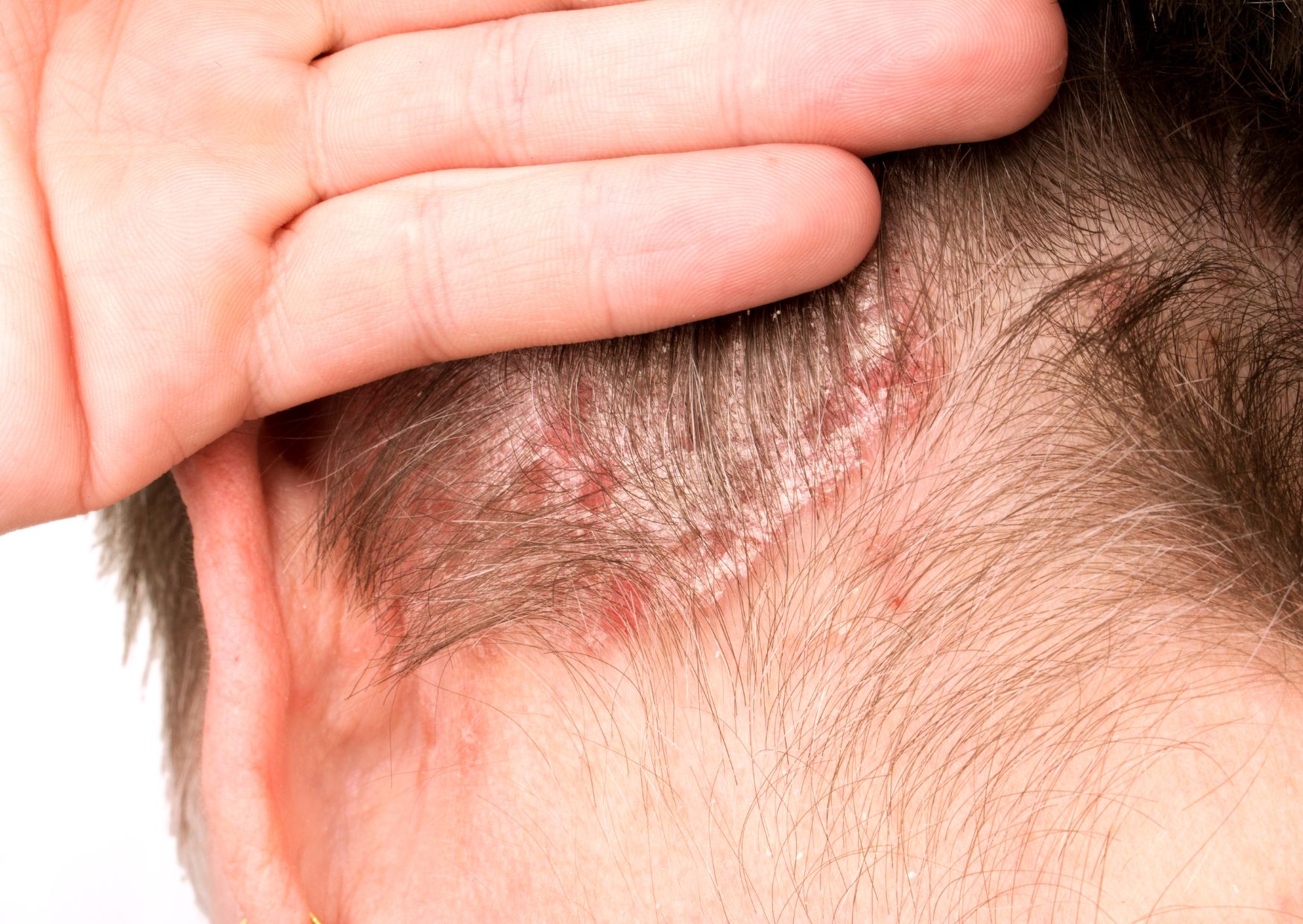
Essential Oils for Seborrheic Dermatitis: A Protocol for Modulating the Skin Microbiome and Controlling Inflammation
Introduction: The Challenge of Seborrheic Dermatitis in the 21st Century
Seborrheic dermatitis (SD) is one of the most common inflammatory dermatoses in current dermatological clinical practice. It is estimated to affect between 3% and 5% of the general population, although its prevalence increases drastically in young adults and adults over 50, reaching up to 10% in certain populations. Characterized by erythema, yellowish scaling, and pruritus in areas with a high density of sebaceous glands—such as the scalp, face, and chest—SD is not just an aesthetic issue; it has a profound impact on patients' quality of life and mental health.
Conventional management often focuses on the chronic use of topical antifungals and corticosteroids, which, while effective in the short term, can have side effects like skin atrophy, tachyphylaxis, or persistent alteration of the lipid mantle. In this context, evidence-based clinical aromatherapy emerges as a powerful and complementary alternative. Essential oils do not merely act as pleasant aromas; they are complex mixtures of bioactive molecules capable of modulating the skin's immune response, controlling the overgrowth of yeasts from the Malassezia genus, and restoring the hydrolipidic barrier without the harshness of synthetic agents. Following the principles of the ESSENIQ Academy and Young Living's "Seed to Seal" purity standards, this guide details an integrative protocol for the long-term management of this condition.
Scientific Section: Pathophysiology and the Role of the Microbiome
To understand how essential oils intervene in seborrheic dermatitis, we must analyze the three pillars that sustain this pathology:
1. **Colonization by Malassezia spp.:** Although it is a normal resident of the skin flora, in patients with SD, these lipophilic yeasts proliferate excessively. Malassezia secretes lipases that break down sebum into unsaturated fatty acids, such as oleic acid, which penetrate the skin barrier and trigger an inflammatory response.
2. **Sebum Dysfunction:** It's not just about the amount of oil, but its composition. There is an alteration in triglycerides and a decrease in squalene, which creates a pro-inflammatory environment.
3. **Aberrant Immune Response:** The skin overreacts to the fungus's metabolites, activating the NF-κB (nuclear factor kappa-light-chain-enhancer of activated B cells) pathway, resulting in the release of pro-inflammatory cytokines like IL-1β and IL-8, which are responsible for redness and itching.
Essential oils work through mechanisms of **chemosensitization of the fungal membrane**, **inhibition of COX and 5-LOX enzymes**, and **stimulation of cellular regeneration** by modulating keratinocytes.
Aromatic Strategy: Classification by Therapeutic Function
A. Antifungal Modulators (Malassezia Control)
- Tea Tree (Melaleuca alternifolia): Rich in terpinen-4-ol. It works by altering the cell membrane permeability of the yeasts.
- Thyme (Thymus vulgaris ct. thymol): Thymol is a potent inhibitor of fungal growth and a biofilm modulator.
B. Anti-inflammatory and Antipruritic Agents (Symptom Relief)
- Copaiba (Copaifera officinalis): Rich in β-caryophyllene. It is a selective agonist of CB2 receptors, reducing the cytokine cascade.
- German Chamomile (Matricaria recutita): Contains chamazulene. It inhibits the lipoxygenase (5-LOX) pathway, reducing erythema.
C. Barrier Regenerators (Healing and Sebum-regulation)
- Lavender (Lavandula angustifolia): Contains linalyl acetate and linalool. It modulates the differentiation of keratinocytes.
- Cedarwood (Cedrus atlantica): Rich in sesquiterpenes. It helps balance the production of sebaceous glands.
The Essential Trio
1. **Tea Tree (*Melaleuca alternifolia*):**
- Active Component: Terpinen-4-ol.
- Mechanism: Causes lysis of the Malassezia cell wall. According to Tisserand's studies, a 5% dilution is comparable in efficacy to ketoconazole in treating severe seborrheic dandruff.
2. **Copaiba (*Copaifera officinalis*):**
- Active Component: β-caryophyllene (up to 50%).
- Mechanism: Acts as a non-psychotropic peripheral cannabinoid. It modulates the local inflammatory response without systemically suppressing the immune system, making it ideal for long-term use on reactive skin.
3. **Frankincense (*Boswellia carterii*):**
- Active Component: Alpha-pinene and limonene.
- Mechanism: Modulates the expression of genes involved in cellular DNA repair and reduces hyperkeratosis (the accumulation of yellowish scales).
Complementary Oils
- Patchouli (Pogostemon cablin): Rich in patchouli alcohol, excellent for weeping dermatitis with exudate.
- Rosemary (Rosmarinus officinalis ct. cineole): Stimulates microcirculation in the scalp to eliminate accumulated toxins.
- Peppermint (Mentha piperita): Contains menthol. Activates the TRPM8 receptor to produce an immediate cooling sensation that stops the itch-scratch cycle.
Oils to Avoid ❌
- ❌ Cinnamon (Cinnamomum zeylanicum): Highly irritating due to its cinnamaldehyde content; can worsen erythema.
- ❌ Clove (Syzygium aromaticum): Eugenol can be caustic on skin with a compromised barrier.
- ❌ Oregano (Origanum vulgare): High risk of chemical burns on thin skin areas like the face.
---
Clinical Recipes for Seborrheic Dermatitis
1. "Sebo-Regulator Pro" Therapeutic Shampoo
Specially formulated for scalp with persistent flaking.
- Base: 100 ml of Copaiba Vanilla Shampoo (Young Living) or a sulfate-free neutral shampoo.
- Essential Oils:
- 20 drops of Tea Tree (Melaleuca alternifolia)
- 15 drops of Cedarwood (Cedrus atlantica)
- 10 drops of Rosemary (Rosmarinus officinalis)
- 5 drops of Peppermint (Mentha piperita)
- Dilution: Approx. 2.5%.
- Instructions: Apply to a damp scalp, massaging vigorously for 3 minutes to allow terpene penetration. Leave on for another 2 minutes and rinse with lukewarm (never hot) water. Use 3 times a week.
2. Bio-Calming Facial Serum (Face and Eyebrows)
For erythematous areas on the sides of the nose, between the eyebrows, and in the beard area.
- Base: 30 ml of Rosehip Seed Oil or V-6 Vegetable Oil Complex (Young Living).
- Essential Oils:
- 3 drops of German Chamomile (Matricaria recutita)
- 3 drops of Copaiba (Copaifera officinalis)
- 2 drops of Lavender (Lavandula angustifolia)
- 2 drops of Frankincense (Boswellia carterii)
- Dilution: 1% (Ideal for sensitive facial skin).
- Instructions: Cleanse face with a lavender hydrosol toner. Apply 3-4 drops of the serum to slightly damp skin at night. Pat gently, avoiding direct contact with the ocular mucosa.
3. Rescue Hair Mask (Acute Flare-up Phase)
To remove thick, yellowish crusts.
- Base: 50 ml of Fractionated Coconut Oil.
- Essential Oils:
- 10 drops of Purification™ (YL blend with Citronella and Lavandin)
- 5 drops of Thyme (Thymus vulgaris)
- 5 drops of Patchouli (Pogostemon cablin)
- Instructions: Apply section by section to the scalp. Cover with a warm towel for 30 minutes. The gentle heat will help the lauric acid from the coconut oil and the essential oils to soften the keratin. Wash afterwards with the therapeutic shampoo.
4. Soothing Hydration Spray (For Acute Itching)
For immediate relief during the day.
- Base: 50 ml of Distilled Water + 5 ml of Witch Hazel (alcohol-free).
- Essential Oils:
- 8 drops of Roman Chamomile (Anthemis nobilis)
- 4 drops of Helichrysum (Helichrysum italicum)
- Instructions: Shake well before each use. Spray from 20 cm away onto the affected area when you feel burning or itching. Helichrysum will help reduce residual vascular inflammation.
---
2026 Phased Protocol
Phase 1: Acute Crisis (Days 1-10)
- Objective: Reduce fungal load and curb inflammation.
- Action: Daily use of the Rescue Hair Mask (every 2 days) and the Facial Serum (morning and night). Do not use makeup or products with silicones.
Phase 2: Subacute Consolidation (Weeks 3-6)
- Objective: Restore epidermal integrity.
- Action: Reduce masks to once a week. Use the Therapeutic Shampoo regularly. Introduce Omega-3 supplements to support the skin from within.
Phase 3: Prevention and Maintenance (Long-Term)
- Objective: Prevent relapses by modulating sebum.
- Action: Apply the Facial Serum only on alternate nights. Use the Hydration Spray after sun exposure or during periods of stress, which are known triggers for SD.
Recommended Daily Routine
| Step | Product | Frequency |
| :--- | :--- | :--- |
| Morning (Cleansing) | Gentle Cleanser + Lavender Hydrosol | Daily |
| Morning (Protection) | Soothing Hydration Spray | As needed |
| Night (Treatment) | Bio-Calming Facial Serum | Daily |
| Showers (Hair) | Sebo-Regulator Pro Shampoo | 3 times/week |
| Weekly Boost | Rescue Mask | Once/week |
Expert Tips
1. Sleep Hygiene: Change your pillowcase every 2 days during acute flare-ups to prevent re-inoculation of Malassezia spores.
2. Stress Management: Since cortisol alters sebum composition, diffuse Stress Away™ or Lavender for 20 minutes before bed to reduce HPA axis activation.
Disclaimer
This guide is for educational and informational purposes based on clinical aromatherapy data. It does not replace a medical diagnosis. If you observe purulent discharge, fever, or persistent inflammation after 2 weeks, consult a dermatologist. These statements have not been evaluated by the FDA. Results may vary depending on the purity of the oils; always use therapeutic grade.
#aromatherapy #seborrheicdermatitis #essentialoils #youngliving #naturalhealth #naturalskincare #protocol2026 #haircare