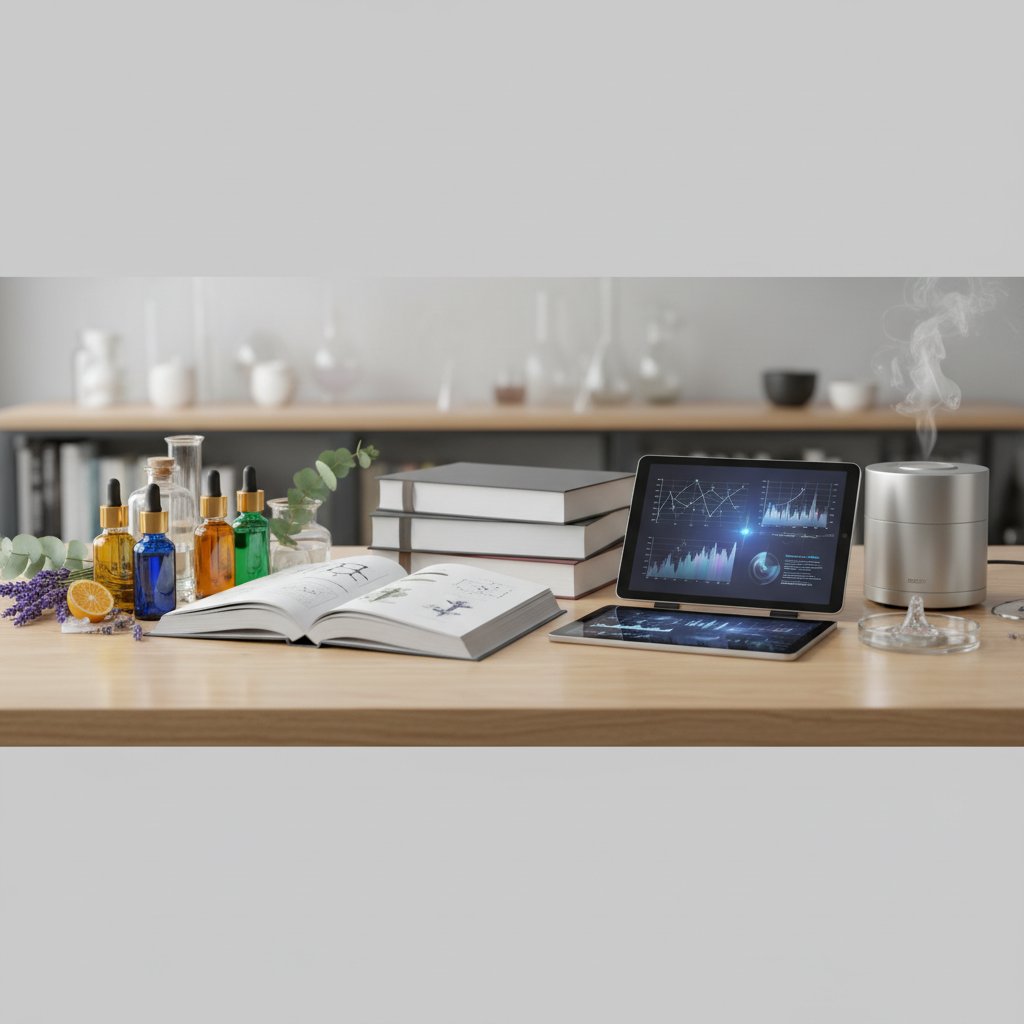
In the dynamic world of aromatherapy, the line separating tradition from scientific evidence is becoming increasingly clear. As of April 10, 2026, the integration of technical data into the use of essential oils has reached a new milestone thanks to global updates in biomedical databases like PubMed. With the implementation of the 2026 version of PubMed Baseline, professionals now have access to over 40 million citations, facilitating the consultation of scientific monographs that support the therapeutic use of volatile compounds.
Understanding terms like 'chemotype' has become fundamental for any enthusiast or professional. For example, when analyzing a monograph for peppermint or lavender, simply knowing its aroma is no longer enough; current science requires us to identify chemical variations due to the growing environment. Reference institutions such as the Tisserand Institute and AromaWeb, which has a track record of over 28 years, emphasize that safety and dilution must be based on these precise chemical profiles to ensure both efficacy and user integrity.
Beyond molecular analysis, recent research highlights the impact of aromapsychology. It has been documented how tea tree or frankincense not only possess antiseptic or anti-inflammatory properties, but also act as tools in client-centered psychological therapies. These aromas have the ability to evoke cultural memories and help with disorders such as seasonal emotional disorder, connecting neuroscience with emotional well-being in a way that classic monographs were only just beginning to explore.
Even ecology joins the scientific debate: it has been discovered that aromatic plants emit volatile organic compounds that contribute to the regulation of Earth's climate, helping to cool the planet. Therefore, choosing quality essential oils is not just a personal health decision, but a connection to climate sustainability. By studying each monograph, from peppermint to the rarest chemotype, we are interacting with a complex network of science, memory, and nature that we are only just beginning to fully decipher in 2026.