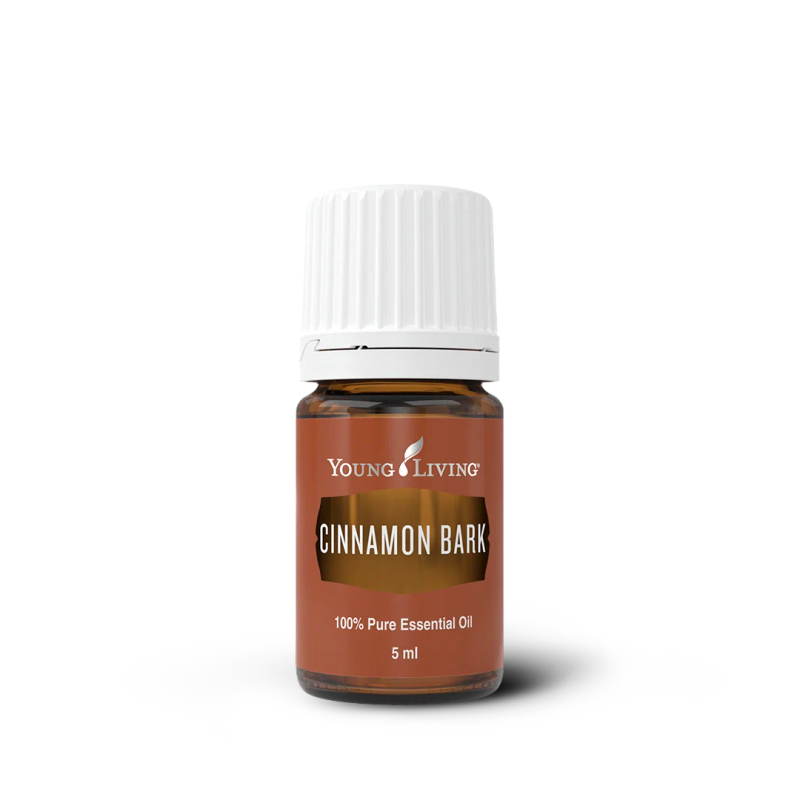
Young Living Cinnamon Bark Essential Oil
Brand: Young Living · SKU: 33091
35,80 €
Key points
- Aceite esencial de Canela (Cinnamomum zeylanicum) 100% puro de Young Living.
- Aroma cálido, especiado y dulce, perfecto para crear ambientes acogedores.
- Ideal para añadir a tu rutina de bienestar, ya sea en difusión o aplicación tópica.
- Contribuye a una atmósfera reconfortante y puede usarse para masajes en momentos de calma diluido.
- Formato de 5 ml, práctico y duradero, compatible con difusores y bases portadoras.
Description
Botanical Origin and the History of Cinnamon
Young Living Cinnamon Bark essential oil is obtained from the Cinnamomum zeylanicum tree, specifically from its bark, through a steam distillation process. This tree, native to Sri Lanka, has been revered since ancient times for its precious spices and aromatic resources. Cinnamon has been historically valued by various cultures, from ancient Egypt, where it was used in embalming and perfumes, to traditional Ayurvedic and Chinese medicine, which included it for its wide range of uses. Its distinctive aroma has been a fundamental element in gastronomy, perfumery, and ceremonies throughout the centuries, leaving an unmistakable olfactory footprint in human history.
Main Chemical Composition
Cinnamon Bark essential oil is famous for its rich and complex chemical composition, which gives it its characteristic aroma and distinctive properties. The main components include:
- Cinnamaldehyde: This aromatic aldehyde is the most abundant compound in cinnamon oil, responsible for much of its sweet and spicy fragrance. It is being researched for its possible effects on various areas of general well-being.
- Eugenol: Present in smaller proportion, eugenol contributes to the spicy and clove-like notes of the aroma, and is also the subject of study for its antioxidant properties and its influence on mood.
- Beta-Caryophyllene: This sesquiterpene provides woody and slightly pungent nuances, and is being investigated for its potential in supporting the body's natural response to challenges.
The synergy of these compounds, along with other monoterpenes and sesquiterpenes present in trace amounts, creates a balanced chemical profile that defines the unique essence of cinnamon.
Aromatic Profile
Cinnamon Bark essential oil offers an unmistakable aromatic profile: a warm, sweet, spicy, and slightly pungent aroma that evokes a feeling of comfort and home. Its rich notes are intense and persistent, capable of transforming any environment. Sweet hints reminiscent of fresh cinnamon sticks are perceived, accompanied by a deeply spicy nuance and a subtle pungency that stimulates the senses. This profile makes it a popular choice for diffusers, especially in colder seasons or when seeking to create a cozy and warm atmosphere.
Uses in Aromatherapy
In aromatherapy, Cinnamon Bark essential oil is valued for its ability to influence the environment and mood. Some of its most valued uses include:
- Creating a comforting ambiance: Its warm and sweet aroma is ideal for diffusing in the home, especially during cold seasons, to foster a homey and cozy atmosphere.
- Olfactory stimulation: The spicy aroma of cinnamon may offer a feeling of liveliness and energy, being used to revitalize the workspace or study area.
- Complement in blends: Its aromatic profile makes it an excellent companion for other essential oils, adding a warm and exotic note to blends oriented towards well-being.
- Space freshening: It can be used to neutralize unwanted odors and leave a pleasant aromatic trace in any room.
How to Use
Young Living Cinnamon Bark essential oil is highly concentrated and must be used with caution. Below are some suggested methods of use for aromatherapy:
- Diffusion: Add 1-3 drops of Cinnamon Bark essential oil to your Young Living diffuser. Its spicy aroma can enhance festive settings or create a warm and cozy atmosphere.
- Topical application (diluted): Due to its potent nature, it is essential to dilute Cinnamon Bark oil before applying it to the skin. It is recommended to mix 1 drop of Cinnamon Bark essential oil with at least 4 drops of a carrier oil, such as Young Living V-6™ Vegetable Oil Complex or fractionated coconut oil. Perform a patch test on a small skin area before general application.
- Direct inhalation: For a quick aromatic experience, you can inhale the aroma directly from the bottle, with caution and avoiding prolonged contact with the skin of the nose. You can also apply a diluted drop to a cloth handkerchief and inhale at intervals.
Synergies
Cinnamon Bark essential oil blends harmoniously with a variety of other essential oils, creating complex and pleasant aromatic blends. Some popular synergies include:
- With citrus (Orange, Tangerine, Lemon): For a stimulating blend with a sweet and spicy touch, ideal for uplifting the mood.
- With resins (Frankincense, Myrrh): Creates a deep, meditative, and warm aroma, perfect for moments of relaxation.
- With other spices (Clove, Ginger): Intensifies the warmth and comforting aspect of the aroma, ideal for autumn or winter environments.
- With woodies (Sandalwood, Cedarwood): Adds depth and an earthy anchor to the cinnamon aroma, evoking a sense of stability.
- With florals (Ylang Ylang in low proportion): For an intriguing contrast that softens the intensity of cinnamon with an exotic touch.
Precautions
Cinnamon Bark essential oil is a powerful oil and must be handled with care. Follow these precautions to ensure safe use:
- Mandatory dilution: Cinnamon is a hot oil. It must always be diluted with a carrier oil (such as Young Living's V-6 Vegetable Oil Complex) before any topical application to avoid skin sensitivity. Avoid applying it directly to the skin undiluted. A ratio of 1 drop of cinnamon to 4 or more drops of carrier oil is recommended.
- Skin sensitivity: Perform a patch test on a small area of the skin before applying to larger areas. If you experience redness, irritation, or itching, discontinue use.
- Sensitive skin: People with sensitive skin should exercise extreme caution and use higher dilution ratios.
- Contact with mucous membranes: Avoid contact with eyes, inner ears, and other sensitive areas. In case of accidental contact, dilute with a carrier oil (never water).
- Internal use: INTERNAL USE IS STRICTLY PROHIBITED for this oil. Cinnamon essential oil, in its regular presentation, is not designed for ingestion. Young Living offers a Plus line of essential oils for internal use in some markets, but this product does not belong to that category.
- Pregnancy and lactation: Consult a healthcare professional before using this oil if you are pregnant, breastfeeding, or under medical supervision.
- Children: Keep essential oil out of reach of children. If used on children (ages 6 and up), a greater dilution is recommended and only under adult supervision. Do not use on babies or young children.
- Storage: Keep the bottle tightly closed in a cool, dark place, away from direct sunlight and heat sources.
Frequently Asked Questions
Can I apply Cinnamon Bark essential oil directly to the skin undiluted?
No, under no circumstances. Cinnamon Bark essential oil is a potent oil known for its "hot" nature and can cause severe skin irritation if applied undiluted. It must always be mixed with a carrier oil before topical application.
What is the difference between Cinnamon Bark oil and Cassia oil?
Although similar in aroma and both "hot," they come from different tree species. Cinnamon (Cinnamomum zeylanicum) is known as "true cinnamon" and has a slightly different chemical profile from Cassia (Cinnamomum cassia). Both are potent and require dilution.
Can Cinnamon Bark essential oil be inhaled directly?
Yes, the aroma can be inhaled directly from the bottle with caution, or by placing a diluted drop on a cloth handkerchief. However, it is not recommended to inhale directly from the bottle for prolonged periods or without prior acclimatization to avoid intense olfactory saturation.
Is Cinnamon Bark oil safe to use on children?
The use of Cinnamon Bark essential oil on children should be done with extreme caution and under the guidance of a professional. Much greater dilution is required (e.g., 1 drop to 8-10 drops of carrier oil) and it is not recommended for babies or very young children due to its potency.
What other essential oils blend well with Cinnamon Bark?
Cinnamon Bark oil blends harmoniously with citrus oils like Orange and Lemon, spicy oils like Clove or Ginger, and resinous oils like Frankincense. It can also add depth to blends with woody oils.
Use essential oils only as directed on the label. Essential oils are not a substitute for any treatment.
Key benefits
- Creates a warm, comforting atmosphere
- Spicy aroma supports revitalization
- Ideal for enhancing diffuser blends
- Adds a distinctive touch to natural perfumery
- Provides a sweet, pungent fragrance for well-being
- Helps mask unwanted odors with intense aroma
Ingredients and composition
- Aceite de corteza de Cinnamomum zeylanicum (Canela)
How to use
<strong>Diffusion:</strong> Add 1-3 drops to your Young Living diffuser to create a cozy atmosphere.
<strong>Topical:</strong> Dilute 1 drop with 4 or more drops of carrier oil (e.g., V-6) before applying to skin.
<strong>Inhalation:</strong> Inhale directly from bottle with caution or from a handkerchief with a diluted drop.