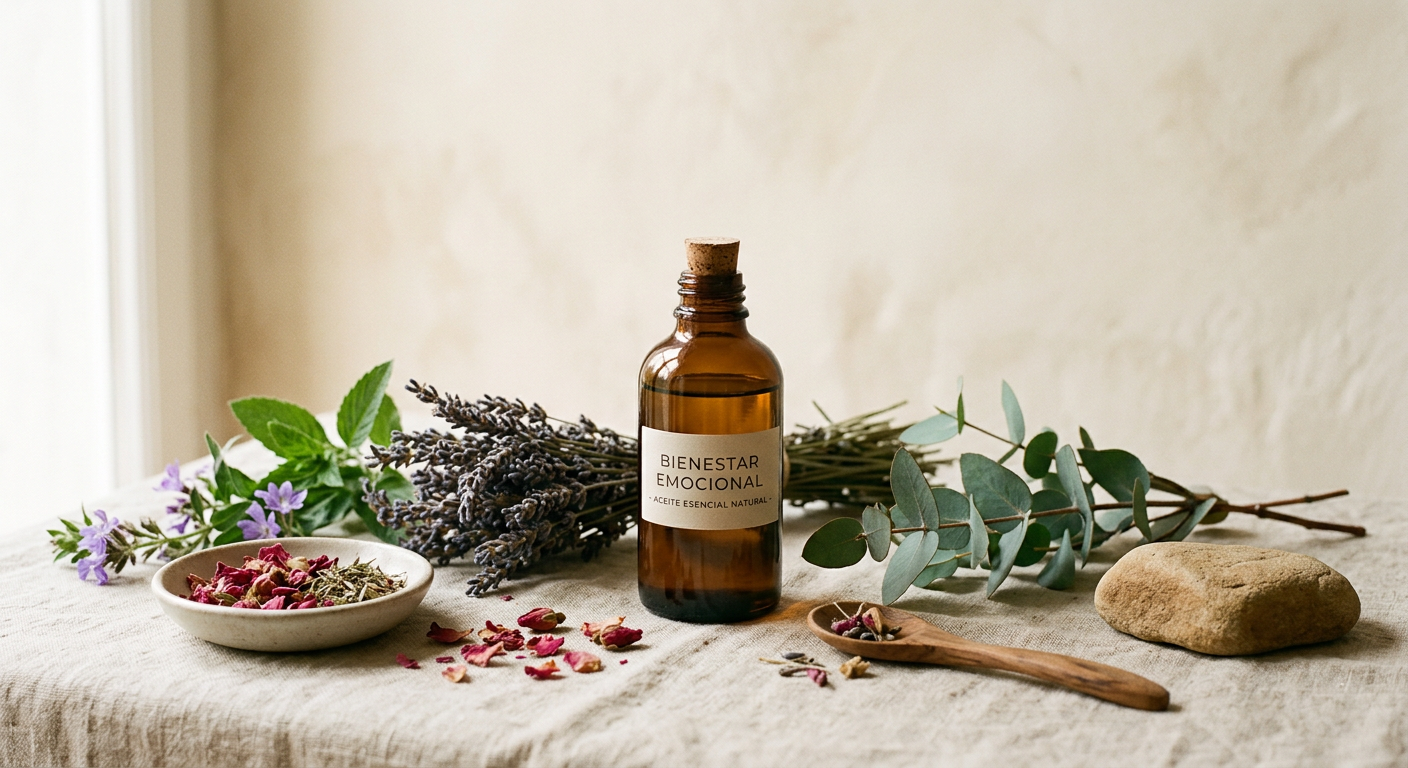
Essential Oils for Emotional Well-being in High-Tension Situations: A Complementary Approach
1. Introduction
In today's world, both in high-level sports and other demanding fields, situations of maximum intensity can generate a considerable emotional burden. Experiencing stress due to competitive or professional pressure is common, often manifesting as occasional insomnia, irritability, and fatigue.
In moments where tension management is vital, essential oils offer a biological modulation pathway that can contribute to overall well-being. Their ability to interact with the limbic system can help modulate stress responses.
2. Educational Section: Stress and the Body
Stress, especially in tense situations, activates the Hypothalamic-Pituitary-Adrenal (HPA) axis. When perceiving a challenging situation, the brain can trigger a series of physiological responses.
Mechanism of Action:
- Amygdala: Can become hyperactive under pressure, sending signals that influence the stress response.
- Cortisol: The adrenal gland can release cortisol. In the short term, this response can support focus, but sustained, it can deplete energy resources.
- Inflammatory Response: Prolonged stress can influence the body's inflammatory response. Some components, such as β-caryophyllene, have been studied for their possible role in modulating nervous system responses.
- Vagus Nerve Balance: Tension can influence vagal tone, affecting the body's ability to relax and recover. Inhaling oils rich in monoterpenes can promote well-being and relaxation.
3. Aromatic Strategy: Support for Well-being
To address these sensations, we classify oils according to their potential action:
- To Support Calm and Relaxation: Oils with compounds that can help reduce the feeling of blood pressure and heart rate, promoting a state of serenity.
- Lavender (Lavandula angustifolia): Rich in linalool and linalyl acetate, known for their relaxing properties.
- For Endocannabinoid System Well-being: Oils that can influence the perception of systemic stress.
- Copaiba (Copaifera officinalis): Rich in β-caryophyllene, a compound whose properties have been investigated for its interaction with the endocannabinoid system.
- For Adrenal Well-being: Oils that can promote a sense of "grounding" and contribute to supporting adrenal function during periods of demand.
- Black Spruce (Picea mariana): Contains bornyl acetate, a component that can help balance the HPA axis.
4. Some Essential Oils Highlighted for Emotional Well-being
1. Frankincense (Boswellia carterii)
- Active Component: α-pinene.
- Mechanism: Can influence nerve receptors, contributing to a sense of deep calm. It is an oil that can promote "mental peace" in high-pressure situations.
2. Copaiba (Copaifera officinalis)
- Active Component: β-caryophyllene.
- Mechanism: Can modulate the immune system response that can be exacerbated by stress. It is considered an amplifier for other oils, which could prolong the feeling of relaxation.
3. Valor (Young Living Blend: Black Spruce, Blue Tansy, Camphor, Frankincense)
- Active Component: Chamazulene (from Blue Tansy).
- Mechanism: Can influence the inflammatory response and promote emotional balance. This blend can be useful for balancing the body's energies in high-tension situations.
5. Complementary Oils
- Cedarwood (Cedrus atlantica): Rich in sesquiterpenes, it can support relaxation and promote restorative sleep.
- Vetiver (Vetiveria zizanoides): Considered an "anchoring" oil. Traditionally used to 'ground' and process emotional tension.
- Orange (Citrus sinensis): Rich in limonene, it can uplift the mood without causing overstimulation.
6. Oils to Use with Caution
- ❌ Cinnamon/Cassia: Can be too stimulating in states of acute anxiety.
- ❌ Peppermint (in excess): Although it can help with focus, in people with difficulty sleeping due to tension, it can worsen the situation due to its stimulating effect.
- ❌ Rosemary CT Camphor: Caution is recommended in cases of hypertension.
7. Well-being Recipes for Moments of Tension
Recipe 1: "Focus and Calm" Roller (For moments of pressure)
Designed to promote calm in demanding environments.
- Ingredients:
- 10 drops of Valor (Young Living)
- 6 drops of Frankincense (Boswellia carterii)
- 4 drops of Black Spruce (Picea mariana)
- 10 ml of V-6 Carrier Oil or jojoba oil.
- Dilution: 10% (Spot use for adults).
- Instructions: Apply to wrists, behind the ears, and on the occipital bone 30 minutes before a stressful situation. Inhale deeply 3 times.
Recipe 2: "Personal Resilience" Diffuser Blend
To create an atmosphere of calm and recovery.
- Ingredients:
- 4 drops of Copaiba
- 3 drops of Cedarwood
- 2 drops of Orange
- Instructions: Add to an ultrasonic diffuser for 40-minute sessions in work or rest areas.
Recipe 3: "Adrenal Well-being" Massage Oil
To apply to the lower back area during times of sustained tension.
- Ingredients:
- 8 drops of Black Spruce
- 5 drops of Lavender
- 30 ml of Carrier Oil (Sweet Almond).
- Dilution: ~2%.
- Instructions: Apply with a gentle massage to the lower back area (above the kidneys) upon waking and before sleep. This can help promote adrenal gland well-being.
Recipe 4: "Deep Relaxation" Bath Salts
To process emotional and physical tension after a demanding event.
- Ingredients:
- 2 cups of Epsom Salts.
- 5 drops of Vetiver.
- 5 drops of Bergamot.
- 1 tablespoon of coconut oil (to dilute the essential oils).
- Instructions: Mix the essential oils with coconut oil, then with the salts. Dissolve in warm water. Soak for 20 minutes. The magnesium in the salts, along with Vetiver, can help reduce mental rumination and promote relaxation.
8. Phased Well-being Protocol
Phase I: Acute Tension Management (During/Post-Event)
- Objective: Promote calm in moments of maximum tension.
- Action: Direct inhalation of Frankincense every 2 hours. Application of the "Focus and Calm" blend on pulse points.
- Frequency: Every 30-60 minutes if tension is maximal.
Phase II: Recovery and Rest (Following Days)
- Objective: Promote the release of excess stress and restorative rest.
- Action: Lower back massage with Black Spruce in the mornings. Nighttime diffusion of Cedarwood and Lavender.
- Frequency: Twice a day.
Phase III: Well-being Maintenance (Daily Routine)
- Objective: Strengthen nervous system well-being for future challenges.
- Action: Ingestion of Copaiba (if it is Young Living's Vitality/Plus line, according to local regulations) or daily topical application to the soles of the feet.
9. Daily Routine: Well-being Strategies
| Step | Product | Frequency |
|---|---|---|
| Morning | Lower back massage (Black Spruce) | Upon waking |
| Midday | "Focus and Calm" Roller | Before meetings or demanding tasks |
| Afternoon | "Personal Resilience" Diffusion | During study or rest |
| Night | Bath salts or foot massage with Valor | 1 hour before sleep |
10. Additional Tips
- 4-7-8 Breathing Technique: When inhaling essential oils, use this breathing technique (inhale for 4 seconds, hold for 7, exhale for 8) to promote vagus nerve activation and relaxation.
- Hydration: Stress can affect hydration. Adding a drop of Lemon Vitality to your water can support a sense of general well-being.
11. Disclaimer
Warning Signs: If you experience crushing chest pain, persistent shortness of breath, thoughts of self-harm, or incapacitating insomnia for more than 72 hours after a stressful event, seek urgent medical attention. Essential oils are complementary and do not replace professional medical or psychological treatment. The FDA and other regulatory agencies do not evaluate these claims to diagnose, treat, or support diseases.
This information is for educational purposes only and does not replace professional medical advice. Consult with your healthcare professional before starting any supplementation.
12. Hashtags
#EssentialOils #EmotionalWellbeing #Resilience #YoungLivingRecipes #StressManagement