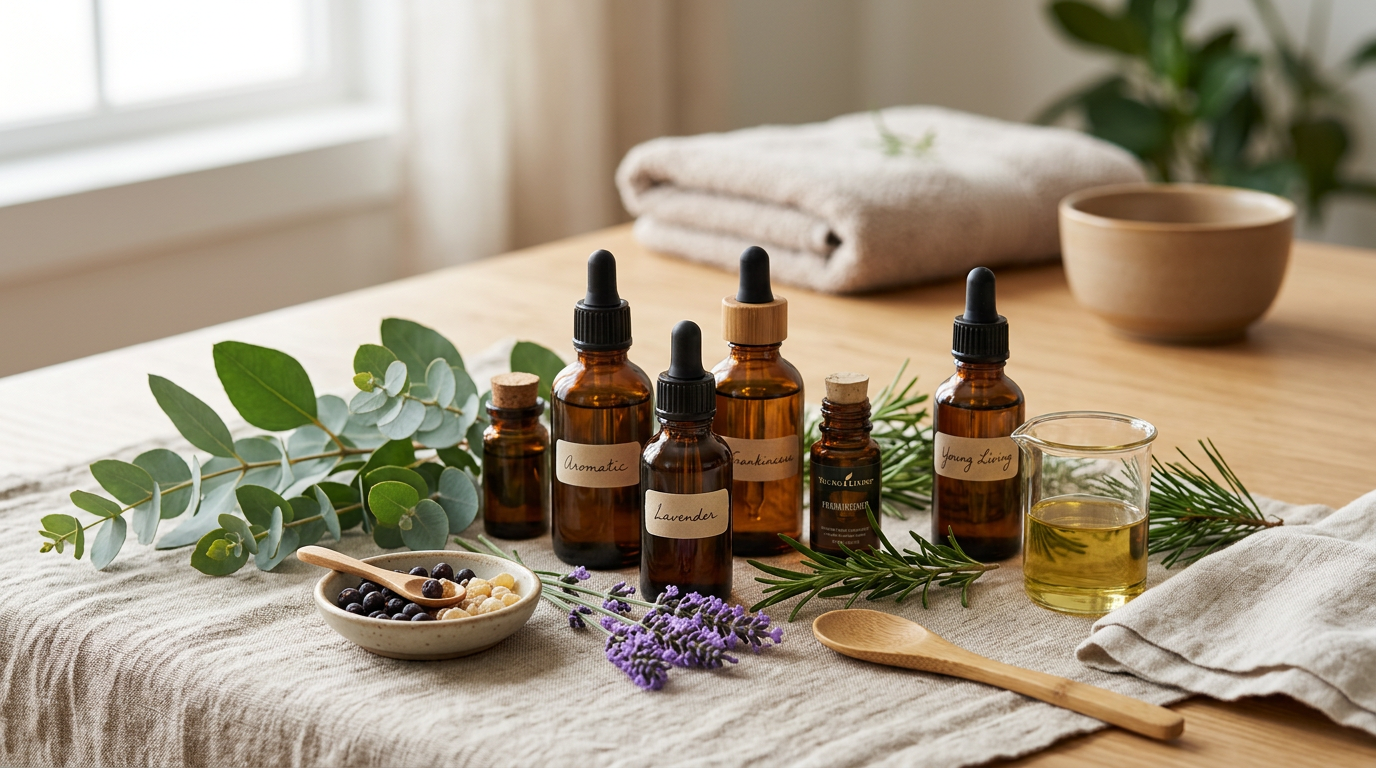
Essential Oils for Knee Osteoarthritis: Restoring Mobility and Quality of Life
1. INTRODUCTION
Osteoarthritis (OA) is the most prevalent joint pathology globally, affecting over 500 million people worldwide. Specifically, knee osteoarthritis (gonarthrosis) accounts for nearly 80% of the total burden of this disease. It is estimated that 10% of men and 13% of women over 60 suffer from symptomatic knee osteoarthritis, a figure that continues to rise due to population aging and increasing obesity rates.
From a medical perspective, knee osteoarthritis is not simply "wear and tear" due to age, but a complex degenerative disease affecting the entire joint structure: hyaline cartilage, subchondral bone, ligaments, and synovial membrane. Conventional management usually focuses on the chronic use of non-steroidal anti-inflammatory drugs (NSAIDs), which, although effective in the short term, present serious gastrointestinal, cardiovascular, and renal risks. In this context, clinical aromatherapy emerges as a fundamental pillar of integrative medicine, offering bioactive molecules capable of modulating inflammation and pain without the systemic effects of synthetic drugs.
2. SCIENTIFIC SECTION: PATHOPHYSIOLOGY OF KNEE OSTEOARTHRITIS
The knee is a trochlear weight-bearing joint that depends on cartilage integrity to absorb impacts. In osteoarthritis, an imbalance occurs between anabolic (formation) and catabolic (destruction) processes of the cartilage.
Progression Mechanism:
1. Extracellular Matrix Degradation: Chondrocytes release enzymes called matrix metalloproteinases (MMPs) that digest collagen and proteoglycans.
2. Synovial Inflammation (Synovitis): Detached cartilage fragments activate synovial macrophages, which release pro-inflammatory cytokines such as Interleukin-1β (IL-1β) and Tumor Necrosis Factor alpha (TNF-α).
3. Oxidative Stress: Excessive production of reactive oxygen species (ROS) damages cellular DNA and perpetuates the pain cycle.
4. Peripheral Sensitization: Chemical mediators activate knee nociceptors, sending constant pain signals to the central nervous system, which can lead to central sensitization if not adequately treated.
Essential oils act at this level by inhibiting key enzymes (COX-2, 5-LOX) and modulating pain signaling pathways in C and A-delta type nerve fibers.
3. AROMATIC STRATEGY: THERAPEUTIC GROUPS
To address knee osteoarthritis, we divide oils according to their biochemical mechanism:
1. Potent Anti-inflammatories (Enzyme Inhibitors)
- *Wintergreen (Gaultheria procumbens): Contains up to 99% methyl salicylate*, a precursor to salicylic acid. Acts as an irreversible cyclooxygenase (COX) inhibitor, blocking the synthesis of prostaglandins that cause pain and swelling.
- *Copaiba (Copaifera officinalis): The oil with the highest concentration of β-caryophyllene* (up to 55%). This sesquiterpene is a selective agonist of cannabinoid type 2 (CB2) receptors, allowing it to reduce systemic and local inflammation without psychoactive effects.
2. Analgesics and Thermal Modulators
- *Peppermint (Mentha piperita): Rich in menthol*. This compound activates TRPM8 receptors (cold receptors), producing an analgesic effect through "sensory distraction" and counteracting the heat of inflammation.
- *Clove (Syzygium aromaticum): Very high content of eugenol*. Acts by blocking nerve conduction of pain and modulates the NF-κB pathway, fundamental in chronic inflammatory processes.
3. Tissue and Structural Regenerators
- *Sacred Frankincense (Boswellia sacra): Rich in alpha-pinene* and boswellic acids (in resinous extracts). Helps reduce the expression of metalloproteinases, potentially protecting cartilage from further degradation.
- *Northern Lights Black Spruce (Picea mariana):* Contains bornyl acetate, excellent for adrenal gland support and the body's natural response to chronic pain stress.
4. "THE 3 ESSENTIALS" FOR THE KNEE
1. *Copaiba (Copaifera officinalis):* It is the "enhancer." Not only is it a massive anti-inflammatory due to its β-caryophyllene content, but it also amplifies the absorption and effect of any other oil it is mixed with. It is essential to curb the persistent inflammatory response in the synovial fluid.
2. *Wintergreen (Gaultheria procumbens):* Known as "liquid aspirin." It is indispensable for acute joint pain. Its ability to penetrate deep into tissues and act on the periosteum of the subchondral bone makes it unique for knee osteoarthritis.
3. *Frankincense (Boswellia carterii):* The king of oils. Acts at a cellular level by reducing chronic inflammation and calming the nervous system. In osteoarthritis, it helps improve the local immune response and reduces morning stiffness.
5. COMPLEMENTARY WELLNESS PARTNERS
- PanaWay (Young Living Blend): Contains Wintergreen, Helichrysum, Clove, and Peppermint. It is the perfect synergistic combination for quick relief of discomfort after exercise or long periods of standing.
- *Turmeric (Curcuma longa): Rich in ar-turmerone*. Improves circulation in the joint area, facilitating the elimination of metabolic waste and the arrival of nutrients for tissue repair.
- *Ginger (Zingiber officinale): Its gingerols* act similarly to chemical COX-2 inhibitors, being especially useful when osteoarthritis is accompanied by a sensation of "cold knee."
6. ❌ OILS TO AVOID
- Cinnamon and Cassia: When applied topically to inflamed joints, they can be too irritating (dermocaustic) on the sensitive skin around the knee if not extremely diluted.
- Photosensitive Oils (Bergamot, Lemon): Should be avoided if the knee will be exposed to the sun (e.g., in summer wearing shorts), as they can cause severe burns.
- Wintergreen and Birch (in specific cases): Avoid in people taking anticoagulants (Warfarin/Sintrom) or who have an aspirin allergy, due to their high salicylate content.
7. CLINICAL RECIPES (ESSENIQ PROTOCOLS)
RECIPE 1: “Thermo-Analgesic Intra-Articular Ointment”
Objective: Deep penetration for cases of acute pain and severe stiffness.
- Ingredients:
- 30 ml Young Living V-6 Enhanced Vegetable Oil Complex (or fractionated coconut oil).
- 10 drops Wintergreen (Gaultheria procumbens)
- 8 drops Copaiba (Copaifera officinalis)
- 6 drops Peppermint (Mentha piperita)
- 4 drops Clove (Syzygium aromaticum)
- Dilution: Approx. 3% (Localized therapeutic use).
- Instructions: Mix in a dark glass bottle. Apply a coin-sized amount to the knee (front, sides, and popliteal fossa). Apply 3 times a day. Perform a gentle circular massage, never pressing directly on the kneecap if there is visible inflammation.
RECIPE 2: “'Boswellia Forte' Regenerative Night Serum”
Objective: Harness nocturnal rest to reduce cartilage degradation.
- Ingredients:
- 30 ml Rosehip Oil or Hemp Oil (rich in fatty acids).
- 12 drops Frankincense (Boswellia carterii)
- 8 drops Black Spruce (Picea mariana)
- 5 drops Lavender (Lavandula angustifolia) to relax peripatellar muscles.
- Dilution: 2.5%.
- Instructions: Apply generously before bed. Wrap the knee with a cotton bandage (not tight) to maintain body heat and promote the absorption of sesquiterpenes.
RECIPE 3: “On-the-Go Mobility Roller”
Objective: Quick relief during the day at work or walks.
- Ingredients:
- 10 ml glass roll-on bottle.
- 5 drops PanaWay (Young Living Blend).
- 5 drops Turmeric.
- Top up with carrier oil (V-6).
- Instructions: Carry in your bag. Apply at the first sign of discomfort or a "twinge" in the joint. Apply to quadriceps trigger points and around the knee.
RECIPE 4: “'Joint Rescue' Epsom Salt Bath”
Objective: Systemic anti-inflammation and magnesium absorption.
- Ingredients:
- 2 cups pure Epsom Salts.
- 5 drops Ginger (Zingiber officinale)
- 5 drops Blue Eucalyptus (Eucalyptus citriodora) - rich in citronellal (anti-inflammatory).
- Instructions: Mix the oils with the salts first (never pour the oil directly into the water!). Dissolve in warm water (37-38°C). Submerge knees for 20 minutes. The magnesium from the salts along with the oils will help relax the tendons supporting the joint.
8. PHASED PROTOCOL
PHASE 1: Acute Crisis (Epistemic Flare-up) - Days 1 to 7
- Objective: Halt the cytokine cascade and relieve stabbing pain.
- Action: Apply the Thermo-Analgesic Ointment every 4 hours.
- Extra support: Ingest 2 drops of Copaiba Vitality in a vegetable capsule every morning (check local regulations).
- Rest: Avoid impact loading.
PHASE 2: Subacute Phase (Recovery) - Weeks 2 to 4
- Objective: Restore range of motion and reduce residual inflammation.
- Action: Reduce ointment application to twice a day (morning and night).
- Integration: Start using the Mobility Roller before light physiotherapy exercises.
PHASE 3: Prevention and Maintenance - Ongoing
- Objective: Stop disease progression and keep cartilage nourished.
- Action: Daily use of the Regenerative Night Serum.
- Habit: Epsom salt bath once a week. Supplementation with Omega-3 fatty acids and collagen.
9. RECOMMENDED DAILY ROUTINE
| Time | Product | Frequency | Purpose |
| :--- | :--- | :--- | :--- |
| Morning | Thermo-Analgesic Ointment | Upon waking | Reduce morning stiffness |
| Mid-afternoon | Mobility Roller | As needed | Support during activity |
| Post-Exercise | Cold compress with Peppermint | After activity | Prevent joint overheating |
| Night | Regenerative Night Serum | Before sleep | Cell repair and rest |
10. TIPS FOR THE OSTEOARTHRITIS PATIENT
1. The Dilution Rule: Never use hot oils (Wintergreen, Clove) undiluted. The skin barrier over the knee is thin, and internal inflammation already generates heat; excess neat oil can cause chemical burns.
2. Alternate Compresses: Apply a warm towel to the knee for 5 minutes before applying the oils. This opens the pores and improves blood perfusion, launching the oil molecules directly into the local lymphatic and circulatory system.
3. Intelligent Movement: Oils "lubricate" the joint at a sensory level, but cartilage needs low-impact movement (swimming, stationary bike) for synovial fluid nutrients to penetrate it by imbibition.
11. DISCLAIMER
Warning Signs for immediate medical consultation:
- Extreme and sudden swelling ("balloon knee").
- Intense redness and feverish heat in the skin of the joint (possible infection or gout).
- Total inability to bear weight.
- Systemic fever above 38.5°C associated with joint pain.
Essential oils are complementary wellness tools and are not intended to diagnose, treat, cure, or prevent any disease. Osteoarthritis is a chronic condition that requires supervision by a rheumatologist or orthopedist. These statements have not been evaluated by the FDA.
12. HASHTAGS
#KneeOsteoarthritis #EssentialOilsHealth #JointHealth #NaturalPharmacy #PainFreeWellbeing