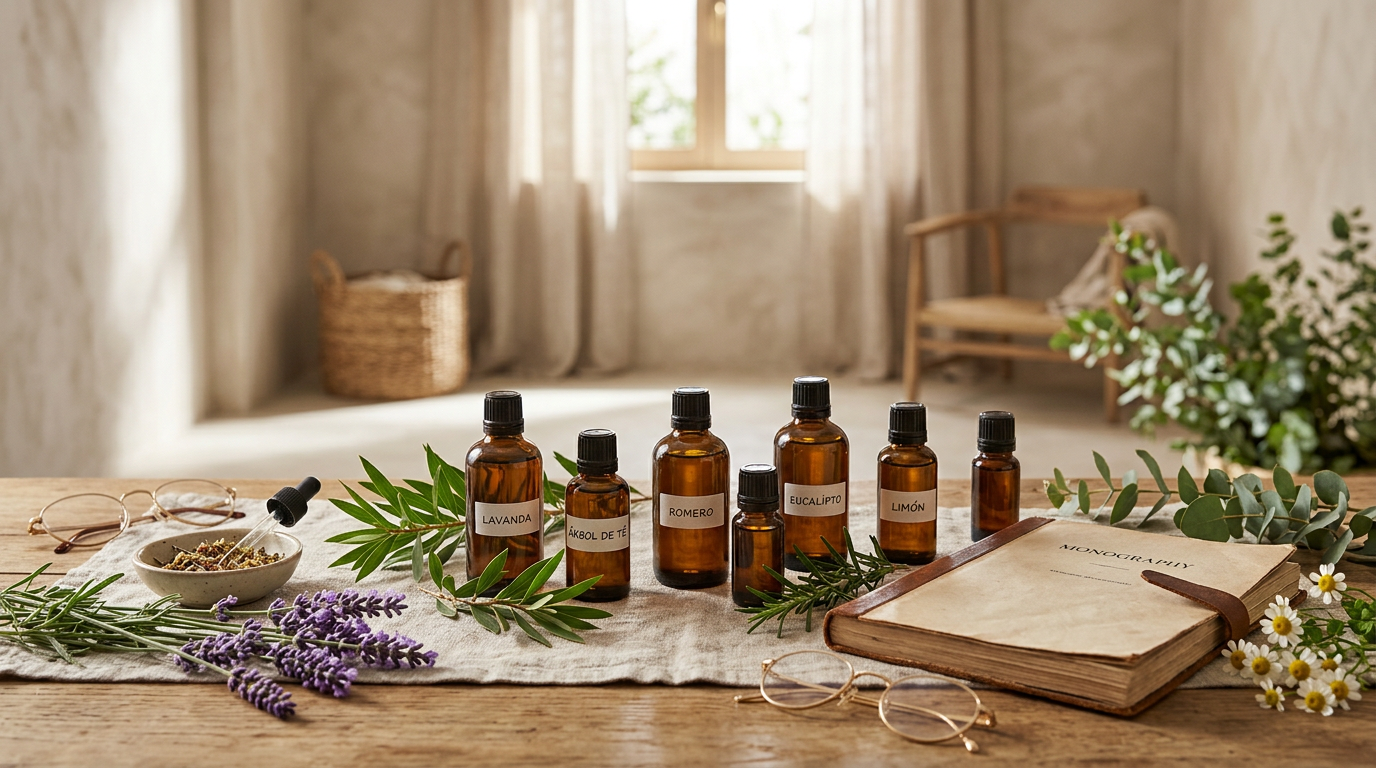
By April 2026, aromatherapy has evolved from a mere wellness trend into an evidence-backed discipline. With the recent update to PubMed Baseline 2026, which now exceeds 40 million biomedical citations, access to scientific monographs on essential oils is more robust than ever. Leading organizations such as NAHA and the Tisserand Institute are integrating this data to offer a technical and safe perspective, essential for both professionals and enthusiasts seeking to go beyond scent.
A rigorous scientific monograph not only identifies the plant but delves into the 'chemotype,' the chemical variation within the same species influenced by the environment. A Lavender (Lavandula angustifolia) with high levels of linalool for mental health and anxiety support is not the same as a Tea Tree (Melaleuca alternifolia) analyzed under purity standards for dermatological applications. The precision in chemical composition is what now allows experts to use aromatherapy as a valuable tool in client-centered therapeutic approaches, providing empathy and measurable well-being.
Volatile compound analysis has revealed fascinating data this year. For example, Frankincense (Boswellia carterii) and Peppermint not only stand out in advanced cosmetics for their impact on the sense of smell and skin, but their study extends to climate regulation: aromatic plants emit compounds that help cool the planet. This connection between human health and global health is a cornerstone in the new safety and dilution guidelines that platforms like AromaWeb have refined after nearly three decades of objective trajectory.
For professionals combating current phenomena like "winter blues" or political anxiety, updated monographs offer specific protocols. Science confirms that aromas evoke powerful memories and can regulate moods through aromapsychology. By consulting scientific sources in 2026, we ensure that the use of essential oils is a safe, ethical, and profoundly effective practice, elevating aromatherapy from empirical use to a precision science.