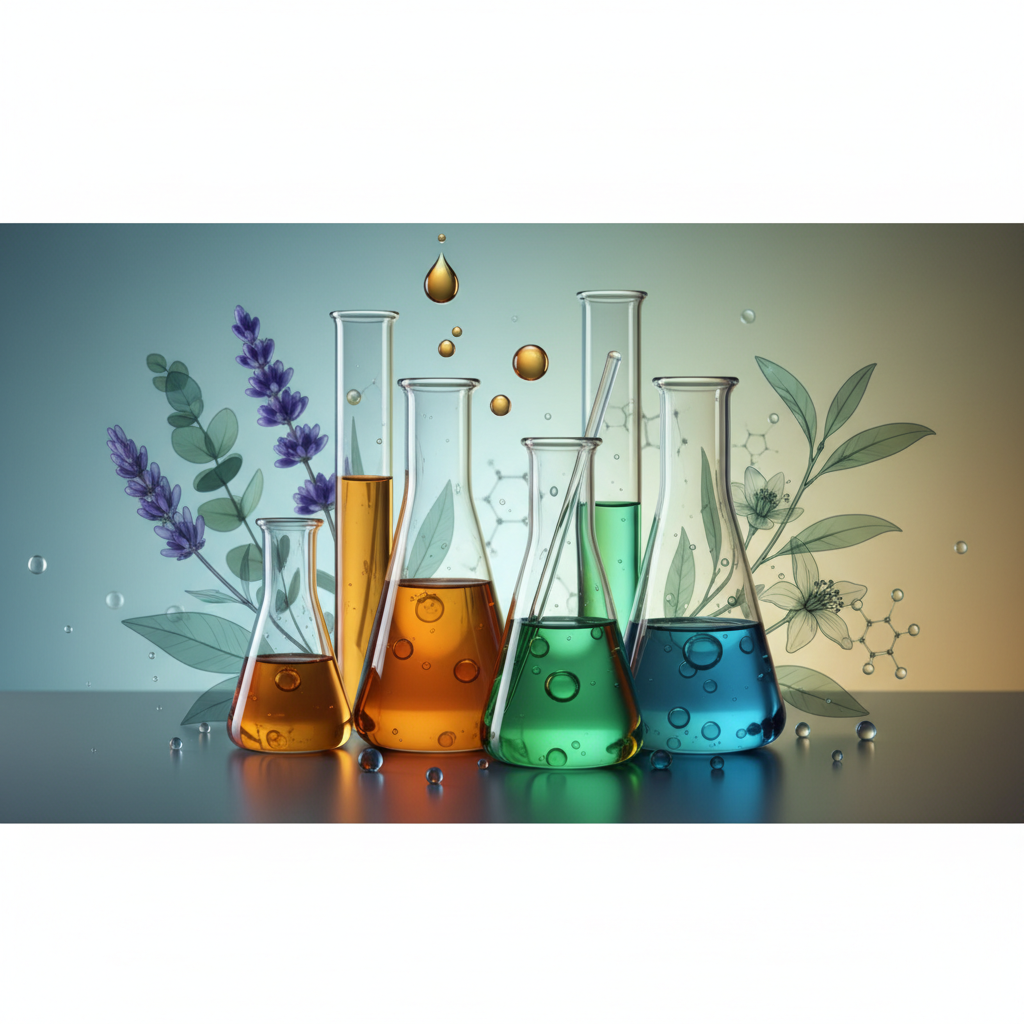
In the current landscape of this Friday, April 10, 2026, aromatherapy has evolved from an empirical practice to establish itself as a discipline supported by biomedical advancements. The recent update of PubMed Baseline 2026, which now exceeds 40 million citations, has allowed for the refinement of scientific monographs of essential oils with unprecedented precision. These technical sheets no longer merely describe the aroma; instead, they detail the pharmacological interaction of compounds such as linalool in lavender or terpinen-4-ol in tea tree, providing professionals and enthusiasts with a framework for clinical safety based on the latest evidence.
A fundamental pillar in these new monographs is the strict identification of the chemotype (QT). It is no longer enough to cite the genus and species; the science of 2026 emphasizes that chemical variations due to the environment—as occurs with the cineole chemotype versus camphor in rosemary—determine the efficacy of the therapy. Institutions like AromaWeb and the NAHA have integrated this data to offer dilution and safety guides that prevent toxicity, allowing the use of peppermint for concentration or frankincense for emotional regulation to be both effective and safe.
Aromapsychology has also taken center stage in this year's reports. Data shared by the Tisserand Institute highlight how the olfactory system connects directly with cultural and emotional memory. Current monographs explore how aromas can be tools in client-centered therapies, even helping to mitigate symptoms of Seasonal Affective Disorder or modern political anxiety. This neuroscientific connection reaffirms that essential oils are much more than fragrances; they are biological modulators of our mental well-being.
Finally, the commitment to sustainability has become an integral part of scientific documentation. Today we know that aromatic plants emit volatile organic compounds that contribute to the regulation of the Earth's climate. Therefore, reading a monograph in 2026 also implies understanding the ecological impact of its production. By consulting official and updated sources, we ensure that our passion for aromatherapy not only takes care of our skin and emotional health but also respects the cycles of a nature that, literally, helps cool our planet.