Stepping into the world of aromatherapy today, April 11, 2026, demands more than just a curious nose; it requires a solid scientific foundation. With PubMed's recent update, which already surpasses 40 million biomedical citations this year, scientific monographs on essential oils have become the indispensable compass for enthusiasts and professionals. These documents are not simple usage guides but technical analyses detailing the molecular composition and safety of plant extracts, enabling an evidence-based practice.
To understand a monograph, it is crucial to master the concept of chemotype (CT). A Lavandula angustifolia is not the same as a Peppermint essential oil analyzed under its current chromatographic profile. The chemotype indicates the predominant chemical variant in an oil of the same botanical species, which determines whether its application will be stimulating or sedating. Institutions like AromaWeb and Tisserand Institute emphasize that safety and correct dilution depend on identifying these specific chemical components to avoid adverse effects.
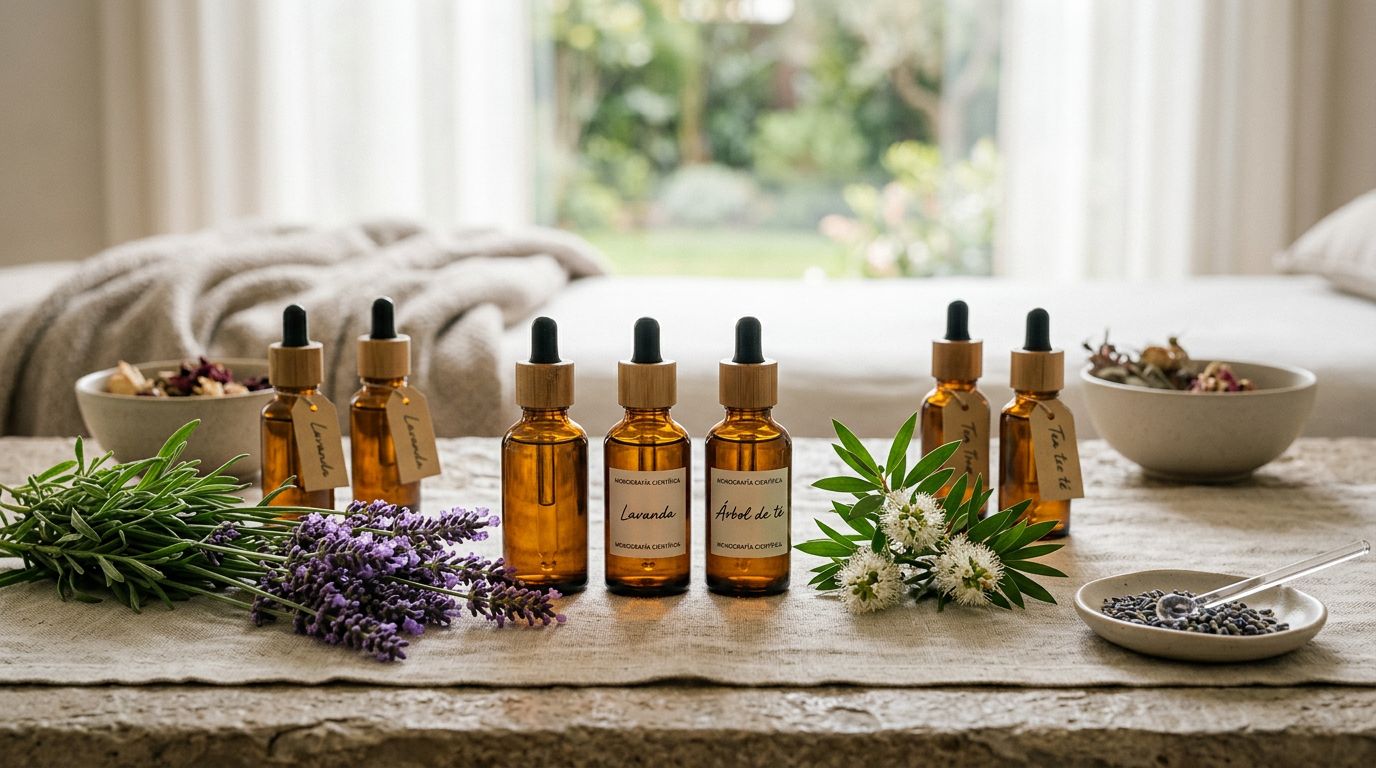
Let's take two pillars of aromatherapy as an example: Lavender and Tea Tree. The 2026 scientific monographs confirm that linalool and linalyl acetate in high-quality lavender remain the gold standards for supporting anxiety and mild sleep disorders. On the other hand, Tea Tree oil (Melaleuca alternifolia) is analyzed for its potent antimicrobial capacity, but its technical monograph warns about oxidation; an oxidized oil can be highly irritating to the skin, a fact that every professional must monitor.
Looking towards modern mental well-being, oils like Frankincense (Boswellia carterii) have gained relevance in 'aromapsychology.' The most recent studies cited by the NAHA (National Association for Holistic Aromatherapy) explore how its terpenic components interact with the limbic system to mitigate stress. In a world where biomedical research advances by leaps and bounds, consulting updated monographs is the only way to ensure that aromatherapy is not just a tradition, but a science of well-being applied with complete safety.