# Essential Oils for Autonomic Nervous System Balance: Pro Guide for Vagal Tone Recovery and Chronic Stress Modulation
---
1. INTRODUCTION: THE INVISIBLE EPIDEMIC OF SYMPATHETICOTONIA
In the hyperconnected society of 2026, an imbalance of the **Autonomic Nervous System (ANS)** is no longer an isolated condition but has become a genuine silent epidemic of the 21st century. According to the latest data from the World Health Organization (WHO) and the impactful conclusions presented at the **1st Experience Pro Conference on Nervous System Balance**, we are facing an unprecedented public health crisis.
Alarming figures indicate that over **65% of the adult population** in urban environments shows clear signs of **chronic sympatheticotonia**. But what does this really mean in physiological terms? We are talking about a state of "sustained hyper-alertness" or an involuntary "survival mode." In this state, the sympathetic nervous system—our ancient fight-or-flight mechanism—remains permanently active, hijacking the functions of the parasympathetic system.
This condition, technically known as **functional dysautonomia**, is not a minor symptom; it is the documented precursor to a cascade of serious pathologies, including:
* **Cardiovascular disorders:** Hypertension and reduced heart rate variability.
* **Metabolic dysfunctions:** Insulin resistance caused by excess blood glucose during stress.
* **Exhaustion of the Hypothalamus-Pituitary-Adrenal (HPA) axis:** Colloquially known as adrenal fatigue.
In this context, **clinical aromatherapy** emerges not as a mystical alternative, but as a robust and necessary biopharmaceutical intervention. This isn't simply about "smelling good" to induce superficial relaxation. We are talking about using high-purity volatile chemical molecules (such as boswellic constituents or terpenic oxides) that, by interacting with receptors in the olfactory bulb and penetrating the blood-brain barrier, modulate the autonomic response in a matter of seconds. The use of therapeutic-grade essential oils, with purity standards like those of the **Seed to Seal line from Young Living**, allows for pharmacological precision in activating the vagus nerve, restoring the body's inherent capacity for regeneration and calm.
---
2. SCIENTIFIC SECTION: THE PHYSIOLOGY OF STRESS AND THE RELEVANCE OF VAGAL TONE
To understand the impact of aromachology, we must first understand the battlefield: our own neurology. The autonomic nervous system operates like a seesaw with two main arms:
1. **Sympathetic Branch (The Accelerator):** Designed for immediate survival against physical threats. It releases adrenaline and noradrenaline.
2. **Parasympathetic Branch (The Brake):** Responsible for rest, tissue repair, efficient digestion, and the immune response.
The harmonious balance between both is what scientists call **autonomic homeostasis**. In an ideal world, after a stressor (like a correction at work), the system should quickly return to a state of calm. However, in chronic stress, the hypothalamus releases corticotropin-releasing hormone (CRH) uninterruptedly, keeping the HPA axis on fire and saturating the body with cortisol—the hormone that, in excess, oxidizes our cells and depresses the immune system.
The Vagus Nerve: The Master Key to Calm
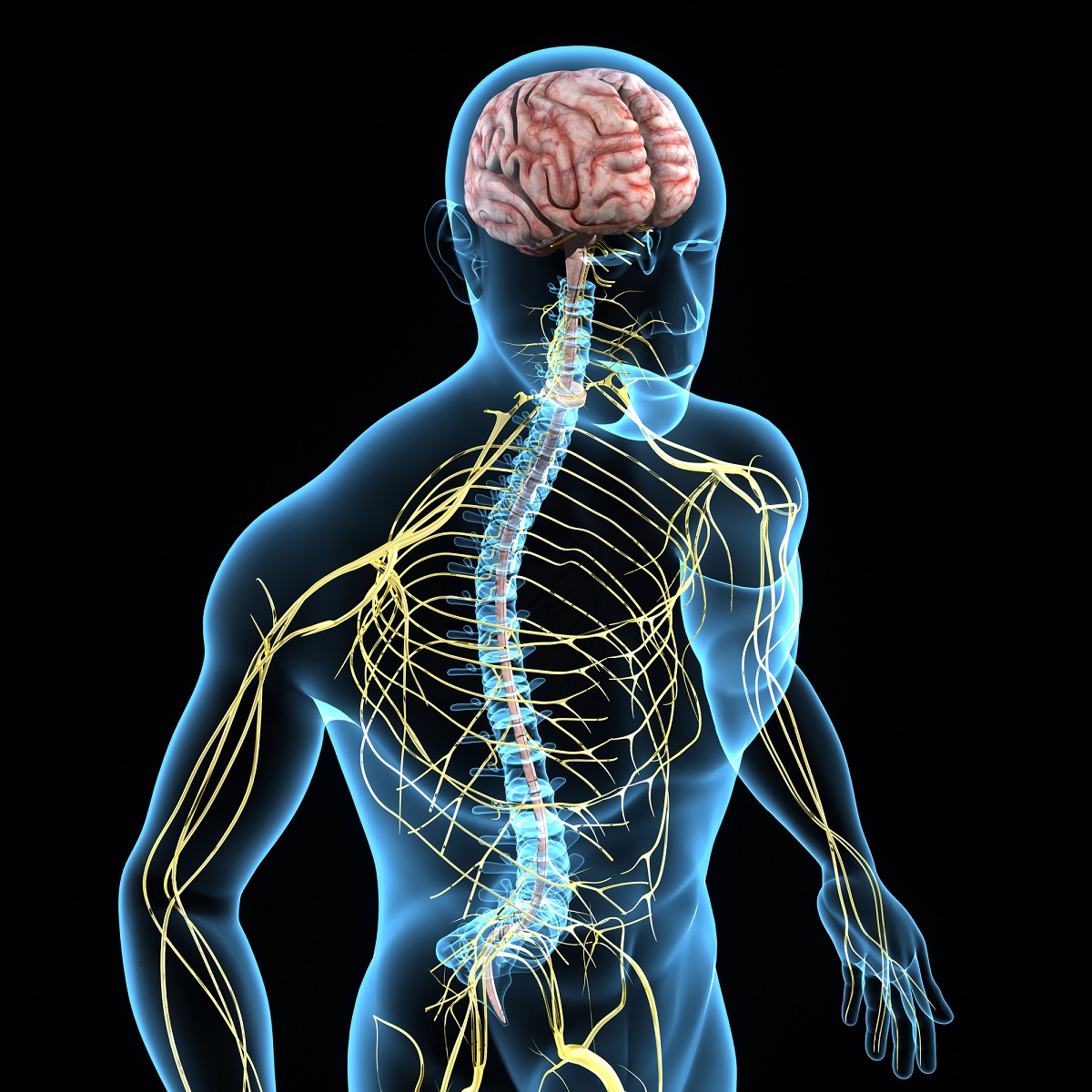
The **Vagus Nerve (Xth cranial nerve)** is, literally, the superhighway of healing. It is the longest cranial nerve in the body and the main component of the parasympathetic system. It originates in the brainstem and branches down to the heart, lungs, and the entire digestive tract (the famous gut-brain axis).
* **High Vagal Tone:** Translates into high **Heart Rate Variability (HRV)**. A person with good vagal tone recovers quickly from a scare, sleeps deeply, and has optimal digestion.
* **Low Vagal Tone:** Manifests as generalized anxiety, brain fog, low-grade systemic inflammation, and a chronic inability to switch off.
How Do Essential Oils Interact with This System?
Modern science has identified two critical mechanisms of action:
1. **Direct Neuro-Olfactory Pathway:** Aromatic molecules travel through the olfactory nerve—the only sense with a direct connection to the emotional brain or limbic system—without passing through the thalamus filter. In seconds, they reach the amygdala (the fear center) and the hippocampus, sending a chemical signal of "safety" that deactivates the stress response.
2. **Systemic Mechanism Pathway:** When applied topically to the dermis, compounds like **linalool** or **β-caryophyllene** are absorbed by blood capillaries. Once in the bloodstream, they act as agonists for specific receptors, such as **GABA receptors** (the neurotransmitter of tranquility) or **CB2 cannabinoid receptors**, reducing the excitability of neurons that trigger anxiety.
---
3. AROMATIC STRATEGY: CLASSIFICATION OF NEUROLOGICAL MODULATORS
Not all essential oils work for every type of stress. For effective clinical practice, we classify essences according to their "molecular footprint" and their impact on the ANS:
* **Vagotonics (Parasympathetic Activators):** These are oils with a predominance of **monoterpene alcohols** (like linalool) and **esters** (like linalyl acetate). Their main function is to sedate the hyperactivity of the cerebral amygdala and soften the "shock" response.
* **Anxiolytics and Neuromuscular Sedatives:** These focus on enhancing GABAergic transmission. They are ideal for stopping the "storm of thoughts" (negative rumination) and associated muscle tension.
* **Cortisol Modulators and Aromatic Adaptogens:** These oils contain **sesquiterpenes**, heavy molecules capable of crossing the blood-brain barrier. They help regulate the excessive secretion of glucocorticoids from the pituitary gland.
---
4. THE 3 "MUST-HAVES" IN THE NEUROLOGICAL KIT
Below, we detail the three fundamental pillars for any autonomic restoration protocol:
1. Lavender (*Lavandula angustifolia*) - The Universal Balancer
Lavender is much more than a floral scent; it is a potent natural pharmacological agent.
* **Chemical Profile:** High concentrations of **Linalool (30-45%)** and **Linalyl Acetate**.
* **Clinical Mechanism:** It acts as a modulator of voltage-gated calcium channels and has an antagonistic effect on NMDA receptors. The result? A measurable increase in **alpha wave** activity in the brain, which is characteristic of states of meditation and deep relaxation.
* **Impact Fact:** Numerous studies place it as the "gold standard" for reducing preoperative anxiety, in some cases surpassing the perceived efficacy of mild benzodiazepines in controlled settings.
2. Copaiba (*Copaifera officinalis*) - The Endocannabinoid System's Ally
Originating from the Amazon, Copaiba oil is a gem of plant chemistry for the nervous system.
* **Star Component:** Contains up to **50% β-caryophyllene**, the most potent known sesquiterpene.
* **Physiological Action:** β-caryophyllene is a **functional phytocannabinoid** that selectively binds to the CB2 receptor. Unlike the THC in cannabis, Copaiba is not psychoactive (it doesn't produce a "high"), but it drastically modulates the inflammatory response of the nervous system.
* **Tactical Application:** It is essential for people with nervous exhaustion resulting from chronic pain, as it "turns off" the constant alarm signal in the brain.
3. Frankincense (*Boswellia carterii*) - The Regulator of Vital Rhythm
Considered a sacred oil since antiquity, science today supports its capacity for neuroprotection.
* **Key Components:** Rich in **α-pinene**, limonene, and various boswellic acids in specific extracts.
* **Rescue Mechanism:** It acts as a "molecular balancer" that slows and deepens breathing. This generates a mechanical activation of pulmonary stretch receptors, which send direct afferent signals to the vagus nerve to induce calm.
* **Additional Benefit:** It helps inhibit **NF-κB**, a key protein in the neuroinflammatory processes that accompany chronic stress and depression.
---
5. COMPLEMENTARY OILS FOR PERSONALIZATION
For a more precise intervention, we can add:
* **Bergamot (*Citrus bergamia*):** Being rich in limonene, it is excellent for reducing systolic blood pressure and heart rate in states of acute agitation. It is "bottled joy" that combats the melancholy of stress.
* **Vetiver (*Vetiveria zizanoides*):** Due to its very high density of sesquiterpenes, it is the "grounding" oil. Use it when the patient suffers from sensory overstimulation or an inability to concentrate (stress-associated ADHD).
* **Ylang Ylang (*Cananga odorata*):** A potent inhibitor of sympathetic cardiac activity; vital for controlling emotional palpitations or tachycardia.
---
6. CLINICAL ALERTS: OILS TO AVOID IN STRESS CRISES ❌
Not all natural oils are harmless in states of nervous imbalance. In patients with a tendency for tachycardia or panic attacks, we must avoid stimulants that can over-excite the sympathetic branch:
* ❌ **Cinnamon (*Cinnamomum zeylanicum*):** Its thermogenic nature can uncomfortably raise the heart rate for someone who is anxious.
* ❌ **Peppermint (*Mentha piperita*):** Although excellent for focus, in high doses, menthol excessively stimulates the TRPM8 receptors, which can be interpreted by a fragile nervous system as a sensory assault, exacerbating states of panic.
* ❌ **Rosemary chemotype Cineole:** 1,8-cineole is a potent neurostimulant and GABA-antagonist; it increases alertness and tension, the exact opposite of what we seek in vagal recovery.
---
7. PRACTICAL PROTOCOLS FOR VAGAL RECONNECTION
The effectiveness of clinical aromatherapy lies in consistency and application method. Here are two optimized recipes for daily practice:
Recipe 1: "Vagus Calm" Roll-on (Biological Anchor)
This blend is specifically designed for stimulating the vagus nerve reflex points on the neck.
* **Ingredients in a 10 ml bottle:**
* Base: **V-6 Vegetable Oil Complex from Young Living** (to ensure capillary absorption without clogging pores).
* 6 drops of **Lavender oil** (Central relaxation).
* 4 drops of **Copaiba oil** (Inflammatory modulation).
* 2 drops of **Bergamot oil** (Mood support).
* **How to Use:** Apply gently along the path of the vagus nerve: start behind the earlobe and move down the sternocleidomastoid muscle towards the collarbone. Repeat 3 times a day or during moments of acute tension.
* **Pro Tip:** After application, inhale the aroma from your hands, making your exhale longer than your inhale (4:8 ratio) to mechanically enhance the vagal effect.
Recipe 2: "Homeostasis Night" Protocol (Diffusion)
Our goal here is to reset the circadian cycle and turn off the brain's alert signal before sleep.
* **Formula for an ultrasonic diffuser:**
* 4 drops of the **Peace & Calming** blend (with Tangerine and Blue Tansy).
* 3 drops of **Cedarwood oil** (stimulates natural melatonin production).
* 2 drops of **Valerian oil** (enhancer of deep sleep).
* **Instructions:** Turn on the diffuser in the bedroom 30-45 minutes before going to bed. The environment saturated with sesquiterpenes will prepare the pineal gland for a deep parasympathetic repair phase.
---
8. CONCLUSION: THE FUTURE OF AUTONOMIC HEALTH
Restoring the balance of the nervous system is not a luxury; it is a biological necessity. Integrating therapeutic-grade essential oils into our daily routine offers us a natural bio-hacking tool to combat the wear and tear of the modern world. By nurturing our vagal tone with the chemistry of plants, we not only reduce stress; we reclaim our ability to enjoy life with presence and serenity.
**Are you ready to transform your well-being?** Explore the potential of scientific aromatherapy and start your vagal recovery protocol today. The science of nature is here to give you back control over your own nervous system.