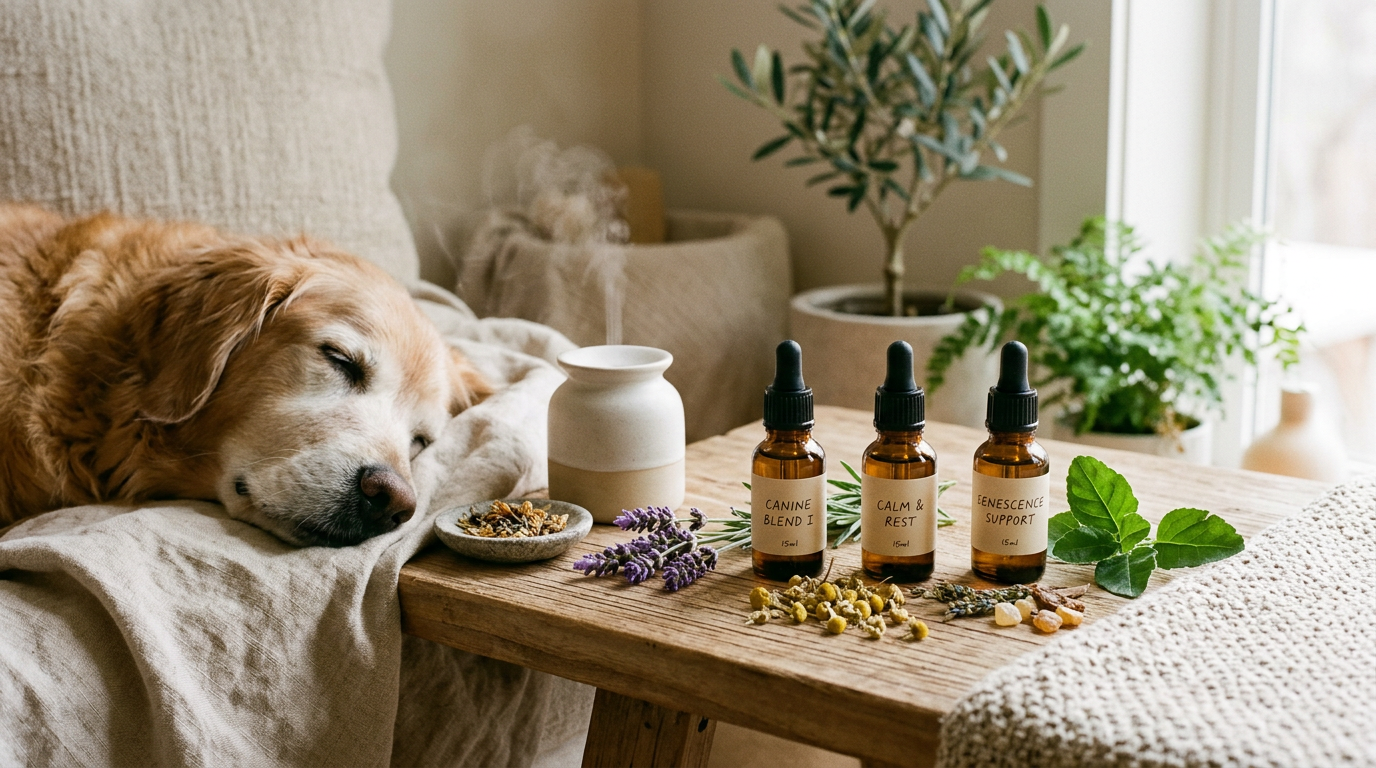
Essential Oils for Cognitive Senescence Stress: Canine Longevity and the Olfactory AI Interface
Introduction
Aging in the canine population is not just a biological process, but a systemic change affecting the animal's emotional homeostasis and communication ability. Canine Cognitive Dysfunction (CCD) is estimated to affect approximately 28% of dogs aged 11 to 12 years, and up to 68% of dogs aged 15 to 16 years. This condition manifests through disorientation, alterations in the sleep-wake cycle, and generalized anxiety that fractures the human-animal bond. At the intersection of veterinary gerontology and biotechnology, a revolutionary field emerges: the use of AI-powered olfactory translation wearable devices that analyze chemical signals (VOCs) emitted by the dog to interpret their emotional needs in real time.
Clinical aromatherapy, applied under this longevity directive, does not merely seek to "aromatize" but to modulate neurotransmitters through the interaction of aromatic molecules with the limbic system. The use of therapeutic-grade essential oils allows for a non-invasive intervention that reduces endogenous cortisol and promotes neuroplasticity in senescent brains. By integrating these protocols with data obtained from olfactory translators, we can perform targeted aromatherapy or "precision aromachology," adjusting formulas according to the device's biometric readings. This guide details the scientific and practical approach to extending the quality of life and mental clarity of our pets through plant chemistry.
Scientific Section: The Neurobiology of Canine Aging
The loss of cognitive function in canines pathologically resembles Alzheimer's disease in humans. It is characterized by the deposition of beta-amyloid plaques in the brain parenchyma and axonal degeneration. This process leads to a reduction in cholinergic activity and an increase in oxidative stress that damages neuronal mitochondria.
When a dog enters a state of senescence stress, the adrenal glands release glucocorticoids in a sustained manner. The olfactory system, being the most direct pathway to the brain—connecting with the olfactory bulb, amygdala, and hippocampus—offers a bypass route to influence the central nervous system (CNS). The chemical components of essential oils, such as monoterpenes and sesquiterpenes, cross the blood-brain barrier and interact with GABAergic and serotonergic receptors, mitigating neuronal excitotoxicity and promoting a state of "emotional coherence" that is now detectable by portable AI sensors that translate panting and skin effluvia into human-readable moods.
Aromatic Strategy: Biochemical Classification for Longevity
To address senile stress and longevity, we classify essential oils according to their molecular functionality linked to neuroprotection:
1. Neuroprotective and Anti-inflammatory (CNS)
- Copaiba (Copaifera officinalis): Rich in β-caryophyllene, a sesquiterpene that acts as a selective agonist of cannabinoid type 2 receptors (CB2). Its action is fundamental for reducing neuroinflammation without psychotropic effects.
- Sacred Frankincense (Boswellia sacra): Contains alpha-pinene and limonene. Boswellic acids (present in the extract, but their precursors in the oil) support cellular health and DNA regeneration, key in longevity protocols.
2. Circadian Rhythm Modulators and Anxiolytics
- Lavender (Lavandula angustifolia): Its main active compounds are linalool and linalyl acetate. They act by inhibiting voltage-gated calcium channels in neurons, producing a natural sedative and anticonvulsant effect that helps regulate sleep in elderly dogs.
- Valerian (Valeriana officinalis): Valerenic acid modulates GABA-A receptors, promoting a state of deep relaxation necessary when AI sensors detect peaks of nocturnal anxiety (sundowning syndrome).
3. Cognitive Stimulants and Energizers
- Rosemary (Rosmarinus officinalis CT cineol): 1,8-cineole has been shown in clinical studies to improve memory retention and mental acuity by inhibiting the enzyme acetylcholinesterase, increasing the availability of acetylcholine in synapses.
The Top 3 Must-Haves
1. Copaiba (Copaifera officinalis): This is the pillar of longevity. By acting on the peripheral endocannabinoid system, it reduces chronic pain from osteoarthritis (comorbid in senescence) and protects nervous tissue. It is indispensable for reducing the "allostatic load" of aged dogs.
2. Frankincense (Boswellia carterii): Considered the oil of interspecies communication. It helps to center disoriented animals. Its small molecules cross the blood-brain barrier to oxygenate the pineal and pituitary glands, improving response to human commands.
3. Royal Hawaiian Sandalwood (Santalum paniculatum): With high levels of santalol, this oil is vital for skin health and mental calm. In senior dogs with hearing or vision problems, sandalwood helps stabilize proprioception and reduce fear of the environment.
Complementary Oils
- Cedarwood (Cedrus atlantica): Contains cedrol, which stimulates the release of serotonin in the brain, subsequently converting to melatonin. Ideal for restorative sleep.
- Vetiver (Vetiveria zizanoides): Known as the oil of "grounding." Its high viscosity and khusimol content calm tactile hyperexcitability in dogs with dementia.
- Orange (Citrus sinensis): Limonene is a powerful antioxidant and mood elevator, useful for dogs showing signs of depression or lethargy.
Oils to Avoid
- ❌ Tea Tree (Melaleuca alternifolia): In high concentrations or pure application, it can be neurotoxic for small dogs and cats, causing ataxia.
- ❌ Birch / Wintergreen (Betula lenta / Gaultheria procumbens): Contains methyl salicylate; risk of liver and kidney toxicity in prolonged longevity treatments.
- ❌ Pennyroyal (Mentha pulegium): Extremely hepatotoxic.
- ❌ Cinnamon/Clove: Can be irritating to sensitive mucous membranes and the powerful sense of smell of an aged dog if not highly diluted.
Recipes for Longevity and Cognitive Support
1. "Clear Mind" Elixir for AI-Compatible Diffuser
Formula designed to work in conjunction with olfactory translation devices that detect confusion.
- 10 drops of Frankincense (Boswellia carterii)
- 6 drops of Rosemary (Rosmarinus officinalis)
- 4 drops of Lemon (Citrus limon)
- Dilution: Pure use in an ultrasonic diffuser.
- Instructions: Diffuse for 20 minutes in the morning when the device indicates high brain activity or disorientation. Helps clear the animal's "brain fog."
2. "Active Longevity" Topical Serum (0.5% Dilution)
For joint support and systemic neuroprotection.
- 2 drops of Copaiba
- 1 drop of Sacred Frankincense
- 1 drop of Myrrh (Commiphora myrrha)
- 30 ml of hemp seed oil (Young Living's V-6)
- Instructions: Apply 2-3 drops to the solar plexus or on the rear paw pads once a day. Perform a gentle circular massage.
3. "Deep Rest" Mist for Pet Beds
For dogs with nocturnal disorientation syndrome detected by motion sensors.
- 15 drops of Lavender (Lavandula angustifolia)
- 10 drops of Cedarwood (Cedrus atlantica)
- 5 drops of Valerian
- 100 ml distilled water and a pinch of sea salt (as an emulsifier)
- Instructions: Shake before use. Spray the resting area 15 minutes before the dog goes to sleep.
4. "Sensory Anchoring" Roller
For acute anxiety events or vet visits.
- 3 drops of Vetiver
- 2 drops of Orange
- 10 ml fractionated coconut oil
- Instructions: Apply behind the ears (where the hair is thinnest) at the first signs of excessive panting translated by the AI collar.
Phased Protocol: Cognitive Decline Management
Phase 1: Acute Crisis (Days 1-10)
Aimed at stabilizing dogs presenting episodes of wandering or nocturnal fear.
- Morning: Diffuse Rosemary and Frankincense to promote synaptic connection.
- Night: Topical application of diluted Valerian and Lavender.
- Frequency: Every 8 hours.
Phase 2: Subacute Stabilization (Weeks 2-6)
Reduction of basal stress.
- Morning: Intermittent diffusion only (15 min on / 2 hours off).
- Evening: "Active Longevity" massage on the spine.
- Frequency: Twice a day.
Phase 3: Prevention and Maintenance (Ongoing)
Preventive use to slow cellular aging.
- Daily: 1 drop of Frankincense on the crown of the head.
- Weekly: Bath with Epsom salts infused with Cedarwood and Lavender.
Daily Canine Longevity Routine
| Step | Product | Frequency |
| :--- | :--- | :--- |
| Wake Up | Frankincense + Orange Diffusion | 20 min at start of day |
| Physical Support | "Active Longevity" Serum | Massage on rear paws |
| AI Monitoring | Adjust based on stress signal | Apply Roller as needed |
| Sleep Hygiene | "Deep Rest" Mist | On bed before turning off lights |
Pro Tips for High-End Owners and Pet Biohackers
1. Synergy with Biofeedback: Synchronize your smart diffuser with your pet's olfactory translation app. If the collar detects VOCs associated with fear (such as adrenaline release detectable by gas sensors), the diffuser can automatically activate with a blend of Lavender and Copaiba.
2. The Rule of Choice: Always allow the dog to move away from the aroma. Their sense of smell is 10,000 times more powerful than a human's; longevity is not achieved through saturation, but through subtle chemical signaling.
Disclaimer
Warning signs requiring urgent veterinary attention: sudden seizures, complete loss of appetite for more than 24 hours, sudden inexplicable aggression, or collapse. This guide uses essential oils as a complementary therapy to improve quality of life and longevity; it does not replace professional veterinary diagnosis. Essential oils must be therapeutic grade (like Young Living) to ensure the absence of pesticides and synthetics that accelerate liver damage in senior animals. These statements have not been evaluated by the FDA.
#caninescentAI #interspeciescommunication #petaromachology #longevidadcanina #aromaterapiaveterinaria