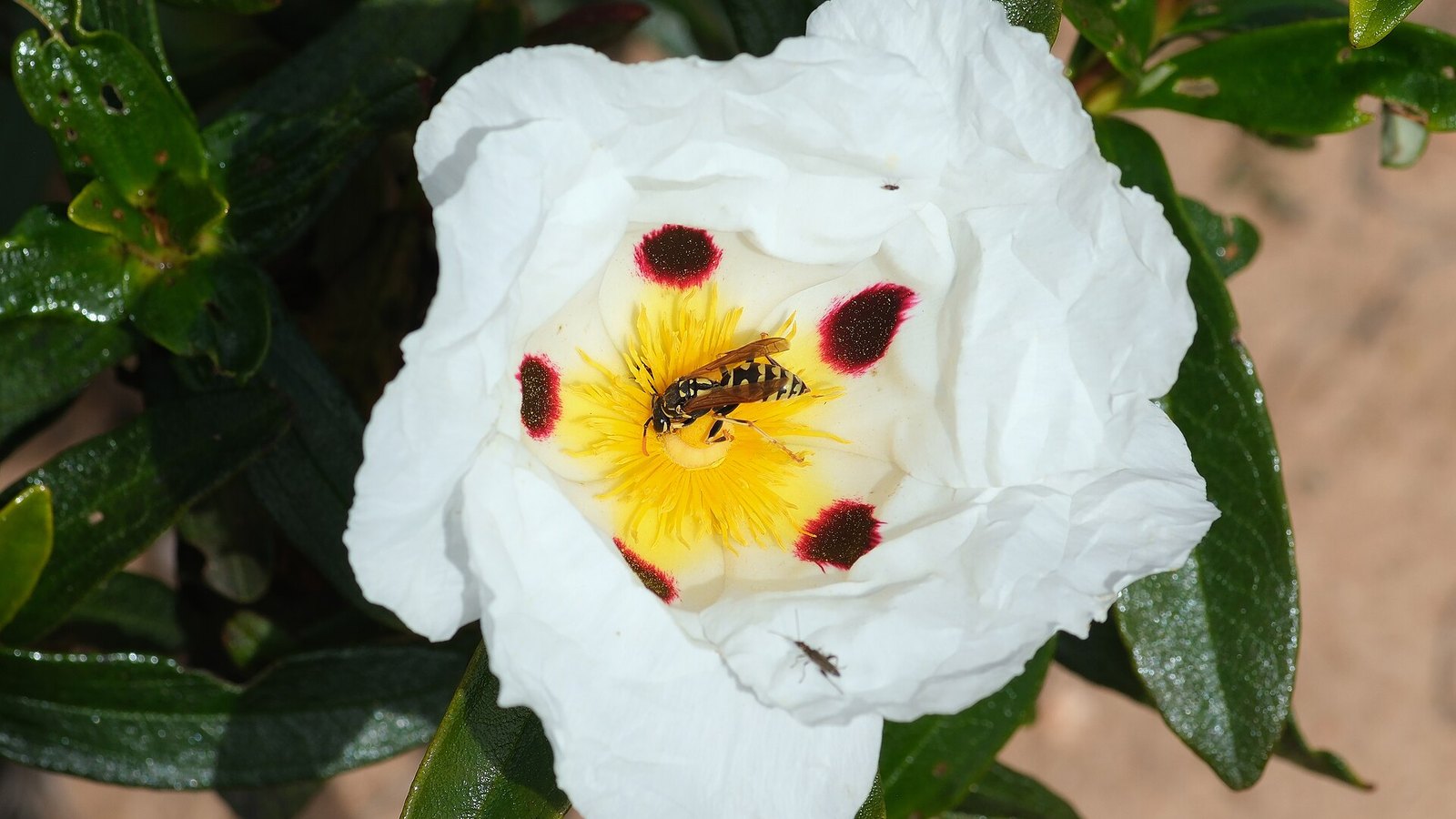
The genus Cistus, commonly known as rockrose or cistus, encompasses a series of evergreen shrubs that thrive in the arid and sunny regions of the Mediterranean. Their ability to grow in poor soils and withstand extreme conditions makes them characteristic elements of the maquis and garrigue landscapes. Beyond their botanical resilience, certain Cistus species have captured human interest over the centuries, primarily due to the aromatic resin they produce, known as labdanum.
Origin and Botanical Characteristics of Cistus
Cistus belongs to the Cistaceae family and includes various species, with Cistus creticus (also known as Cistus incanus) being one of the most studied in relation to its compounds. These plants are characterized by their sticky leaves and ephemeral flowers, which often last only a day. The resin, labdanum, accumulates on the leaves and stems, especially during the warmer months. Historically, this resin was collected from the wool of goats grazing among the shrubs, an ancient practice that highlights the close relationship between flora, fauna, and human communities in these regions.
From a botanical perspective, resin production is interpreted as a plant defense strategy against dehydration and predation. These compounds, which include a variety of polyphenols, flavonoids, and terpenes, are what give Cistus its distinctive organoleptic properties and, by extension, have been the focus of interest in various applications.
Labdanum: A Resin with History
Labdanum, the resin obtained from Cistus, possesses a complex and deep aroma, with balsamic, woody, and slightly sweet notes, which have made it valuable in perfumery since antiquity. Its use dates back to ancient civilizations, where it was appreciated not only for its fragrance but also in traditional practices and rituals. The ancient Egyptians, for example, used it as an ingredient in incenses and ointments. This ethnobotanical history underscores the persistence of Cistus in human culture, transcending its ecological function to acquire cultural and practical significance.
The chemical composition of labdanum is complex and varies depending on the Cistus species, climate, and extraction method. However, the main bioactive components are typically polyphenols, such as gallic and ellagic acids, as well as flavonoids. These compounds are known for their antioxidant activity in in vitro and ex vivo studies, which has led to exploring their potential in various areas.
Traditional Applications and Current Studies
Traditionally, Cistus infusions have been used in some Mediterranean cultures. Modern interest in Cistus has focused on its polyphenolic compounds. Preliminary research has explored the antioxidant potential and the ability of some Cistus extracts to modulate certain biological responses in laboratory models. These studies are in initial phases and aim to better understand the mechanisms of action of the phytochemicals present in the plant.
It is important to note that most of this research has been conducted in vitro or in animal models, and much more clinical research in humans is required to establish any specific effects or applications. The standardization of extracts and the determination of safe and effective doses are crucial steps that are still under development.
Considerations and Precautions
Although Cistus is generally considered safe when consumed as an occasional infusion, the concentration of its compounds can vary significantly between products. The recommended dose on commercial products should not be exceeded, and it is always prudent to consult a healthcare professional before incorporating any supplement into the diet, especially during pregnancy, lactation, or if other supplements are being taken. Potential interactions and side effects are not fully documented for all populations.
Frequently Asked Questions about Cistus
What exactly is labdanum?
Labdanum is an aromatic, sticky resin obtained from various species of Cistus shrubs, especially Cistus creticus. It is known for its use in perfumery and for its bioactive compounds.
*Can Cistus be consumed in any form?*
Cistus is traditionally consumed as an infusion. It is also found in the form of extracts or supplements. It is always important to follow the manufacturer's instructions and consult a healthcare professional.
*Are there scientific studies on Cistus?*
Yes, there are in vitro and animal studies investigating the properties of Cistus extracts, particularly their antioxidant activity and the modulation of biological responses. However, human research is limited, and more rigorous clinical studies are needed.
This content is for informational purposes only and does not substitute professional medical advice.
FDA Disclaimer: These statements have not been evaluated by the Food and Drug Administration. This product is not intended to diagnose, treat, cure, or prevent any disease.