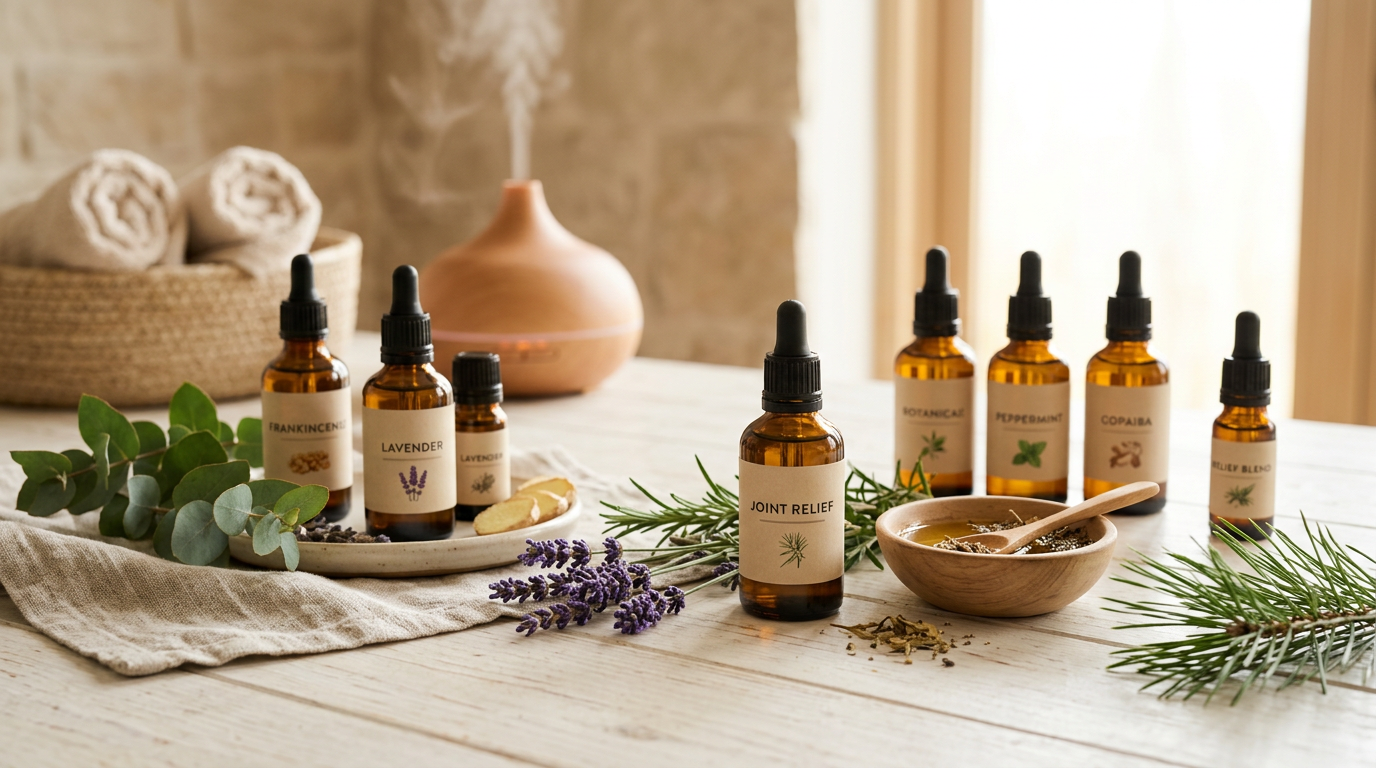
Essential Oils for Joint Wellness: Natural Support for Inflammation and Mobility
Guide to essential oils for joint wellness. Protocols to help manage pain and flexibility with Copaiba, Wintergreen, and Peppermint from Young Living.Introduction
Osteoarthritis (OA) is not simply an inevitable consequence of aging, but a complex joint condition affecting more than 500 million people worldwide. It is estimated that approximately 15% of the population over 60 years of age suffers from clinical symptoms of OA, making it a major cause of discomfort in older adults. This condition is characterized by the deterioration of hyaline cartilage, subchondral bone remodeling, and inflammation of the synovial membrane.In the current medical context, OA management often focuses on pain reduction using NSAIDs (non-steroidal anti-inflammatory drugs), which can pose significant long-term risks to gastrointestinal and cardiovascular health. This is where aromatherapy and therapeutic-grade essential oils, such as those from Young Living, can offer an alternative or complement. These botanical extracts contain hydrophobic molecules that can penetrate dermal layers and reach joint tissues to help manage inflammatory responses and support the reduction of pain perception through specific receptor systems such as TRP and CB2.
Informative Section: Pathophysiology of Osteoarthritis
Osteoarthritis is defined by an imbalance between catabolic and anabolic processes in cartilage. In a healthy joint, chondrocytes maintain the extracellular matrix (ECM). In OA, factors such as mechanical stress, age, and genetic predisposition activate signaling cascades that can affect joint well-being.
- Synovial Inflammation: Although historically considered a “wear and tear” condition, today we know that synovitis (inflammation of the synovial membrane) occurs in early stages. Synovial macrophages release pro-inflammatory cytokines such as Interleukin-1 beta (IL-1β) and Tumor Necrosis Factor alpha (TNF-α).
- Matrix Degradation: These cytokines induce the expression of matrix metalloproteinases (MMPs), enzymes that digest type II collagen and proteoglycans, weakening the cartilage structure.
- Peripheral Sensitization: Inflammatory mediators (prostaglandins, bradykinins) sensitize joint nociceptors, decreasing the pain threshold and associated with persistent discomfort.
- Mechanism of Action of Essential Oils: Molecules like methyl salicylate (present in Wintergreen) can act as possible inhibitors of cyclooxygenase (COX), which may help block prostaglandin synthesis. β-caryophyllene (in Copaiba) can act as a selective agonist of cannabinoid type 2 (CB2) receptors, which may help modulate the immune response and promote inflammation reduction.
Aromatic Strategy
1. Fraction with Anti-inflammatory Support (Modulation of NF-κB and COX-2)
- Copaiba (Copaifera officinalis): Rich in β-caryophyllene (up to 50%). It is a sesquiterpene that can act as a CB2 receptor agonist, associated with the modulation of the NF-κB pathway, fundamental in the production of inflammatory mediators.
- Frankincense (Boswellia carterii / sacra): Contains boswellic acids and monoterpenes (alpha-pinene) that can inhibit 5-lipoxygenase (5-LOX), contributing to the reduction of leukotriene formation.
2. Fraction with Analgesic Support (Pain Management Support and TRPM8)
- Peppermint (Mentha piperita): Rich in menthol. It can activate TRPM8 receptors (cold receptors), which could help block calcium entry into sensory neurons, interrupting the pain signal.
- Wintergreen (Gaultheria procumbens): Contains up to 99% methyl salicylate. It is a natural precursor to aspirin that can inhibit COX-1 and COX-2 enzymes peripherally.
3. Circulatory and Cellular Wellness Fraction
- Juniper (Juniperus communis): Can support the elimination of accumulated deposits and toxins in the synovial fluid by improving microcirculation.
- Turmeric (Curcuma longa): Contains ar-turmerone, which can support the cellular antioxidant response and promote chondrocyte protection.
THE 3 ESSENTIALS FOR JOINT WELLNESS
- Copaiba (Copaifera officinalis): Can offer powerful anti-inflammatory support. Unlike other oils, in addition to helping with comfort, it can support connective tissue integrity by reducing oxidative stress.
- Wintergreen (Gaultheria procumbens): Can be very useful for acute discomfort. Its ability to penetrate dermal tissue and act directly on the inflammatory focus makes it a valuable option.
- Frankincense (Boswellia carterii): The “king of oils” is essential for its ability to support cellular function and contribute to the reduction of morning stiffness associated with osteoarthritis.
COMPLEMENTARY OILS
- Lemongrass (Cymbopogon flexuosus): Its high citral content can help strengthen the ligaments and tendons that support the affected joint.
- Palo Santo (Bursera graveolens): Rich in limonene, it can offer support for pain management and emotional well-being for people with chronic discomfort.
- Marjoram (Origanum majorana): Known for its muscle-relaxing properties, it can be ideal when OA causes compensatory tension around the joint.
OILS TO USE WITH CAUTION OR AVOID IN CERTAIN CASES
- ❌ Cinnamon Bark (Cinnamomum zeylanicum): In frequent topical applications, it can be irritating to mature skin, which tends to be thinner.
- ❌ Clove (Syzygium aromaticum): Although it can promote comfort (eugenol), it is a powerful dermal irritant. It should be used with extreme caution and never in high concentrations on joints with inflammation or a sensation of heat.
- ❌ Low-quality or “fragrance” oils: In complex conditions, the use of adulterated oils can introduce substances that could negatively affect well-being. It is recommended to use only Therapeutic Grade (Young Living).
RECIPES FOR JOINT WELLNESS
Recipe 1: Penetrating Balm “Mobile Joint”
Ideal for knees and hands with morning stiffness.
Ingredients (3% Dilution):
- 30 ml of V-6 Carrier Oil or Arnica Oil (macerated).
- 8 drops of Copaiba (Copaifera officinalis).
- 6 drops of Wintergreen (Gaultheria procumbens).
- 4 drops of Peppermint (Mentha piperita).
Instructions:
- Mix the oils in an amber glass bottle.
- Apply a small amount to the affected joint first thing in the morning.
- Massage in circular movements for 3 minutes to promote absorption and blood flow.
- Apply dry heat (seed pack) for 10 minutes after application to enhance active ingredient penetration.
Recipe 2: Roller “Quick Support”
For moments of discomfort during the day.
Ingredients (5% Dilution for hands/feet):
- 10 ml of Grapeseed Oil.
- 10 drops of PanAway (Young Living blend containing Wintergreen, Helichrysum, Clove, Peppermint).
- 10 drops of Copaiba.
- 5 drops of Palo Santo.
Instructions:
- Fill a 10 ml glass roller bottle.
- Roll directly over the joint line (articular interline).
- Repeat up to 4 times a day as needed.
- Note: PanAway contains Helichrysum, which can support microvascular tissue wellness.
Recipe 3: Bath Salts “Synovial Wellness”
For general support in cases of generalized joint discomfort.
Ingredients:
- 1 cup of Epsom Salts (Magnesium Sulfate).
- 5 drops of Juniper (Juniperus communis).
- 5 drops of Frankincense (Boswellia carterii).
- 1 tablespoon of Sweet Almond Oil (to dilute the oils before adding them to the water).
Instructions:
- First mix the essential oils with the almond oil and then with the Epsom salts.
- Pour into warm bath water.
- Soak for 20 minutes. The magnesium in the salts can help relax muscles, while Juniper can support the elimination of cellular debris in the joint area.
PHASED PROTOCOL FOR JOINT WELLNESS
Phase 1: Acute Discomfort (Days 1-7)
In this phase, discomfort can be intense, there may be warmth in the area, and limited movement.
- Frequency: Apply the “Quick Support” roller every 3 hours.
- Objective: Support in the modulation of COX enzymes and support in the reduction of nerve sensitization.
- Additional Action: Cold compresses (optional) if the joint feels very warm to the touch.
Phase 2: Subacute Phase (Weeks 2-6)
Discomfort decreases but stiffness and discomfort persist when bearing weight.
- Frequency: Apply the “Mobile Joint” Penetrating Balm 2 times a day (morning and evening).
- Objective: Contribute to the management of chronic inflammation through the use of Copaiba and Frankincense to promote chondrocyte protection.
Phase 3: Maintenance and Continuous Wellness (Ongoing)
To support constant joint wellness and maintain flexibility.
- Routine: Daily topical use of Copaiba and diffusion of oils that can promote relaxation to reduce the general perception of discomfort.
- Suggested Supplementation: Consider ingesting citrus oils (limonene) or supplements like Young Living's AgilEase which contains frankincense powder and essential oils.
RECOMMENDED DAILY ROUTINE
| Step | Product | Frequency |
|---|---|---|
| Morning (Waking) | “Mobile Joint” Balm | Apply to joints with stiffness |
| During the day | “Quick Support” Roller | As needed (maximum 4 times) |
| Afternoon/Evening | Diffusion of Frankincense or Copaiba | 30 minutes while resting |
| Night (Before bed) | Application of Deep Relief or pure Copaiba | In areas of greatest wear and tear |
COMPLEMENTARY TIPS
- Mindful Movement: Joint wellness can be promoted with low-impact movements (Tai Chi, Swimming). Apply oils *before* exercise to support tissue preparation and *after* to help manage post-exertion inflammation.
- Anti-inflammatory Diet: Essential oils can be more effective within the context of a healthy lifestyle. Reduce consumption of refined sugars and flours that can contribute to inflammatory processes.
DISCLAIMER
This information is for educational purposes only and does not substitute professional medical advice. Consult with your healthcare professional before starting any supplementation.
- Warning signs: If the joint shows extreme redness, fever, total loss of function, or sudden and severe swelling, seek emergency medical attention; it could be a condition requiring immediate medical care.
- Essential oils are complementary to support quality of life and joint wellness; they do not replace medical treatment prescribed by your healthcare professional.
- “These statements have not been evaluated by the FDA. These products are not intended to diagnose, treat, may support or prevent any disease, so consult your healthcare professional.”