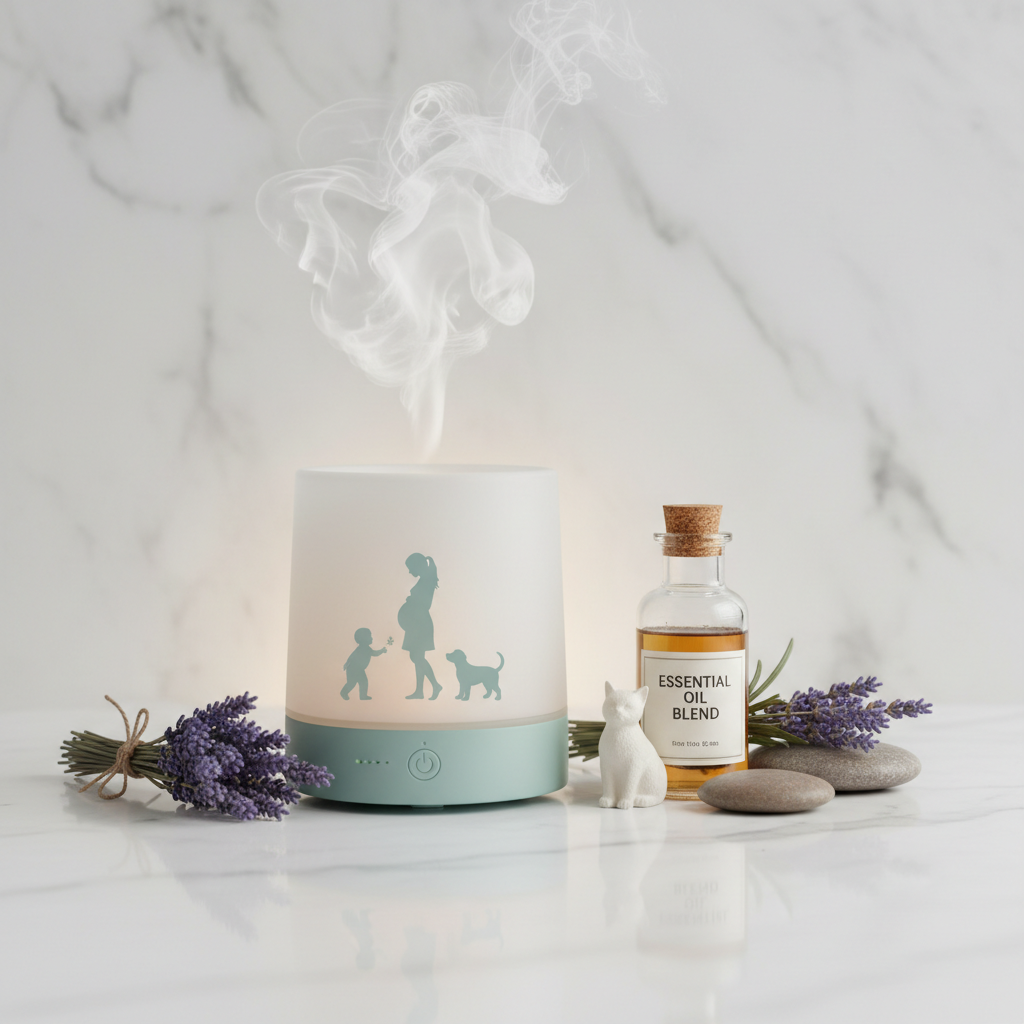
In the pursuit of a healthier and more balanced home, many parents and pet owners turn to aromatherapy as a natural solution for well-being. However, in 2026, science led by experts like the Tisserand Institute and Healthline reminds us that "natural" is not always synonymous with harmless. When it comes to child safety, pregnancy, and our four-legged companions, caution must be the absolute priority. Aromapsychology offers incredible benefits for uplifting mood and combating seasonal affective disorder, but its application in vulnerable populations requires expert guidance to avoid risks of toxicity or adverse reactions.
For expectant mothers, aromatherapy during pregnancy can be a relief for morning sickness and stress, provided that 'pregnancy safe aromatherapy guidelines' are followed. According to specialized platforms like What to Expect, symptoms such as breast tenderness and nausea can be better managed with gentle aromas, but it is vital to avoid certain oils that can induce contractions or affect fetal development. The key lies in extreme dilution and prioritizing gentler methods, such as hydrosols (hydrosols for babies), which offer the therapeutic properties of plants in a water-based solution much safer for a newborn's delicate olfactory system.
'Diffuser safety nursery' is a critical topic for parents of young children. Babies' respiratory systems are still developing, and excessive use of diffusers in enclosed spaces can cause irritation. The current recommendation is intermittent diffusion (30 minutes) and never applying essential oils directly to the skin of infants under six months of age. For managing gas or sleep problems, sources like Healthline suggest evidence-based approaches that prioritize physical comfort over constant chemical exposure. The premise is clear: less is more when we talk about young lungs.
We cannot forget the furry members of the family. 'Essential oils safety pets' is an area where serious mistakes are often made. The metabolism of dogs and, especially, cats processes aromatic compounds very differently from humans. The feline liver lacks certain enzymes to metabolize the phenols present in many popular essential oils. Before turning on your diffuser, make sure the space is well-ventilated and that your pet always has an escape route to an aroma-free room. Ignoring this could lead to silent toxicity that affects their long-term health.
Finally, integrating aromatherapy into the home must be an act of conscious care. As a health journalist, my recommendation is always to verify the source of your oils and consult with certified experts. Essential oils do not just beautify the skin or perfume the environment; they are potent chemical concentrates that interact with our limbic system and our physiology. By educating ourselves on child safety and animal welfare, we transform our home into a truly safe and harmonious sanctuary for all its members.