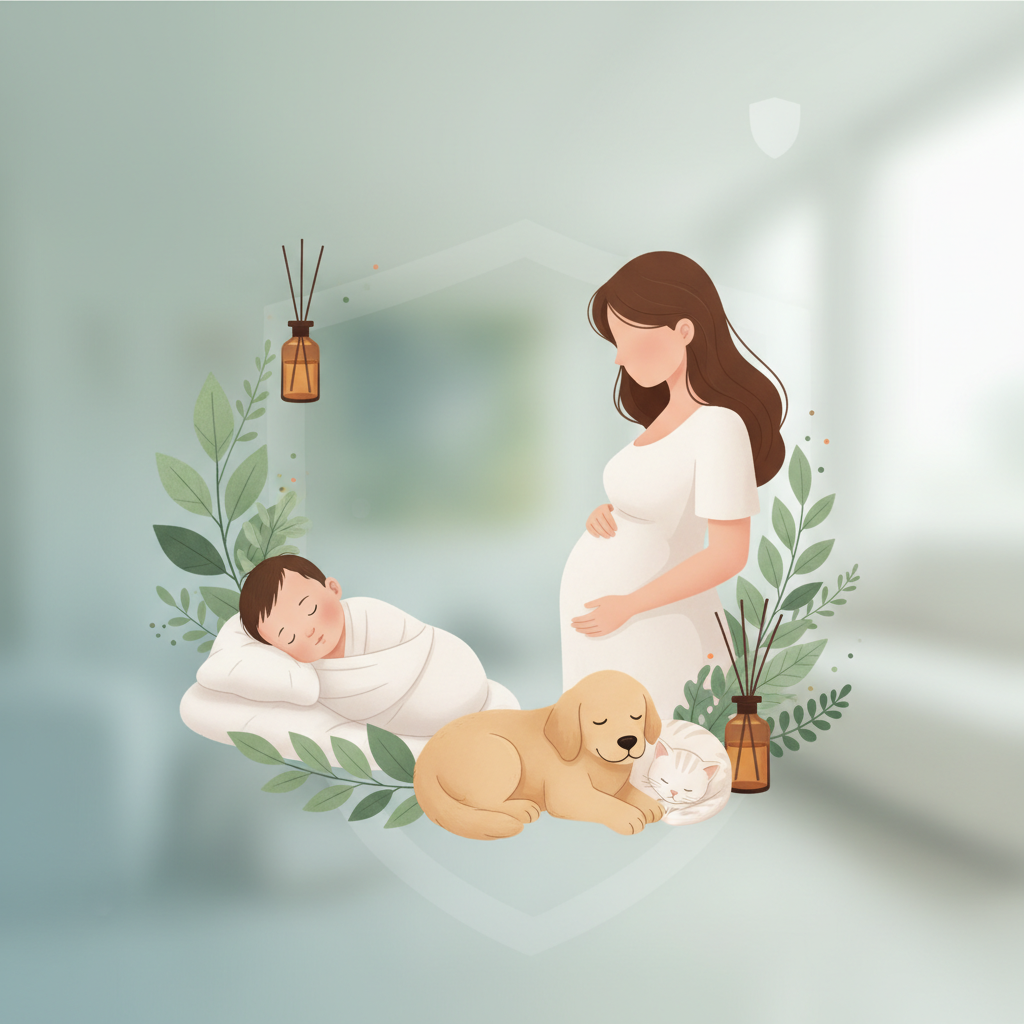
On the path to a more balanced home, aromatherapy has become a powerful tool for emotional well-being. However, when it comes to the most vulnerable members of our family—babies, children, pregnant women, and our pets—safety must be the absolute priority. According to experts at the Tisserand Institute, essential oils are not just 'pleasant smells' but organic chemical compounds capable of influencing the nervous system and physical health. Therefore, protecting the little ones begins with understanding that their skin and respiratory systems are much more sensitive than an adult's.
During pregnancy and when trying to conceive, prudence is key. As highlighted in 'What to Expect' health guides, the body undergoes drastic hormonal and physical changes where certain aromas can exacerbate nausea or, in more severe cases, interfere with fetal development if contraindicated oils are used. Aromapsychology suggests that the sense of smell can be an ally in reducing labor anxiety, but always under professional supervision and using extremely low dilutions. Never apply essential oils directly to the skin without a carrier, especially if you are expecting a baby.
For parents of children and babies, the golden rule is 'less is more'. Child safety in aromatherapy dictates that diffusers should not be used in the rooms of newborns under three months of age. After that age, mild oils like lavender or chamomile can help with sleep, but always ensuring adequate ventilation. Furthermore, it is vital to remember that seemingly harmless products can cause allergic reactions or respiratory difficulties; therefore, consultation with pediatricians who follow reliable sources like Healthline is essential before introducing any complementary therapy into the care routine.
We cannot forget the other 'children' of the house: pets. The metabolism of dogs and, especially, cats, processes aromatic substances differently from humans. What is relaxing for us can be toxic for a feline due to their hepatic inability to break down certain phenols. Safe aromatherapy for pets always involves allowing them an escape route from the room where the diffuser is located, so they can move away if the aroma is overwhelming. Home sustainability depends not only on what we recycle but on the chemical balance we maintain in the air that everyone breathes.
In conclusion, integrating aromatherapy into a 2026 family requires education and respect for the biology of each member. By opting for therapeutic-grade essential oils and following strict dilution protocols, we transform our home into a sanctuary of calm without compromising health. Remember: true family protection comes from accurate information and the conscious use of nature's treasures.