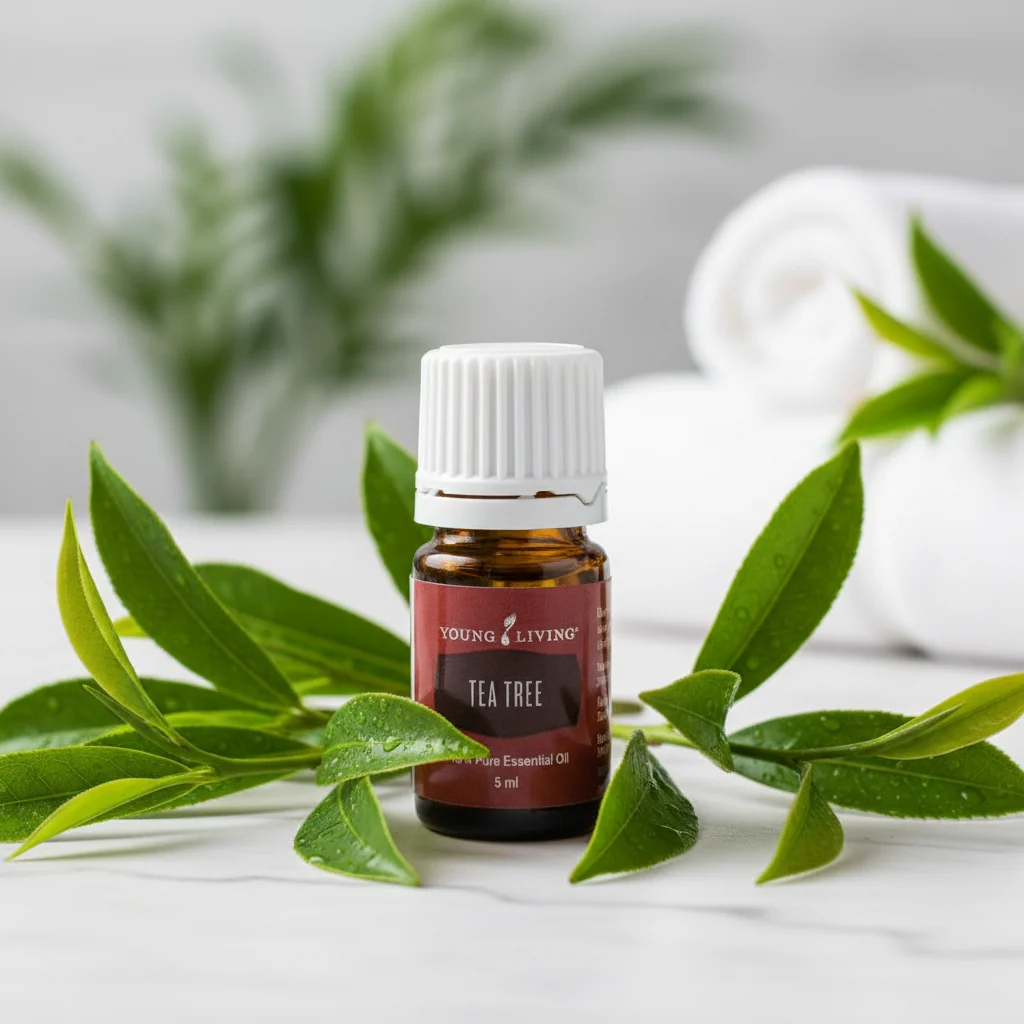
Tea Tree Oil Myths and Realities: A Safe Use Guide
In our exciting journey through the vast and ancient world of essential oils, few emanate as much mystique, and at the same time, as much controversy, as Tea Tree Oil. Its name evokes images of ancestral healing, clear skin, and countless natural solutions. But how much of what we hear about Melaleuca alternifolia is true and how much is simply modern folklore?
As part of our commitment at the Esseniq 360 Ecosystem to offer evidence-based natural health education with millimeter precision, today we will unravel the "Tea Tree Oil Myths and Realities: A Safe Use Guide." We will delve into its chemistry, explore its purifying efficacy, and, most importantly, rigorously address the necessary precautions for its use, especially those related to potential hormonal implications, a topic that has generated much discussion and misinformation.
Our goal is to empower you with knowledge, transforming curiosity into an informed and safe practice. Because at Esseniq, we firmly believe that true well-being blossoms when knowledge illuminates every choice we make.
---
The Esseniq 360 Ecosystem: Addressing the Botanical Truth of Tea Tree
Tea Tree Essential Oil, derived from the leaves of the Melaleuca alternifolia tree, native to Australia, has been used for centuries by aboriginal populations for its purifying properties. Today, it is one of the most popular and studied essential oils worldwide. However, its fame has brought both indiscriminate use and a proliferation of misinformation.
At Esseniq, our mission is to go beyond anecdotes and trends. We apply a scientific-practical approach, like an expert natural pharmacist, to break down the botany, chemistry, and safe applications of each oil. For Tea Tree, this means understanding not only its benefits but also its limits and best practices for integrating it into a conscious wellness protocol.
Physiology and Mechanism of Action: How Does Tea Tree Work?
The power of Tea Tree Oil lies in its complex chemical composition, with terpinen-4-ol being its most prominent active component, responsible for much of its purifying and balancing properties. Other key components include gamma-terpinene and alpha-terpinene.
These compounds act at multiple levels:
- Cell Membrane Integrity: Terpinen-4-ol has been shown to interfere with the cell membrane integrity of various microorganisms, altering their permeability and leading to the leakage of intracellular components, which hinders their proliferation. This mechanism explains its action on certain microorganisms.
- Modulation of Skin Response: On the skin, Tea Tree supports the modulation of mild inflammatory responses, helping to calm and purify irritated areas. It does this through the inhibition of the release of pro-inflammatory mediators and the modulation of cytokine activity.
- Environmental Purification: When diffused, Tea Tree can contribute to purifying the air, offering a fresher and cleaner environment.
The Most Common Myths About Tea Tree Oil
1. **Myth 1: It is a "natural antibiotic" that can support / contribute to all infections.**
- Reality: While Tea Tree exhibits properties that support deep cleansing and balancing of skin microbiota, it is crucial to understand that it is not an antibiotic drug and should not be used as a substitute for treating severe bacterial, fungal, or viral infections diagnosed by a medical professional. Its action is supportive and complementary, not curative in a pharmaceutical sense. Severe infections require medical attention.
2. **Myth 2: It can be used neat (undiluted) on any part of the body.**
- Reality: Tea Tree is potent and, like many essential oils, should be used diluted, especially on sensitive skin or delicate areas. Neat topical application can cause irritation, redness, or skin sensitization. Safe dilutions (0.5% to 3% depending on the area and individual sensitivity) are key.
3. **Myth 3: It instantly and safely eliminates lice or scabies.**
- Reality: Studies have suggested that Tea Tree may have an inhibitory effect on these parasites. However, it is not an instant solution or the sole treatment. For scabies and lice, specific medical protocols must be followed. Tea Tree can be a complement, but always under supervision and never as an exclusive treatment, especially in children.
4. **Myth 4: It is safe for ingestion.**
- Reality: Tea Tree Oil should NEVER be ingested. It is toxic if consumed, causing symptoms such as confusion, difficulty walking, skin rashes, and even coma. Its use is exclusively topical or aromatic. Young Living products are clearly labeled for their intended use.
Scientific Truth: The Purifying Efficacy of Melaleuca alternifolia
Scientific research has validated many of the traditional properties of Tea Tree Oil, positioning it as a valuable ally in personal well-being and home care.
- Support for Blemish-Prone Skin: Numerous studies support the use of Tea Tree to help balance sebum production and purify pores, making it a popular ingredient in products for oily or blemish-prone skin. Its ability to modulate the skin response makes it ideal for calming occasional redness associated with these conditions.
- Nail and Foot Skin Care: Its purifying action makes it a favorite for nail and foot skin care, helping to maintain them in optimal condition and with a healthy appearance.
- Home Cleaning: Thanks to its purifying properties, it is an excellent additive in homemade cleaning products, offering a natural alternative to deodorize and keep surfaces clean.
- Hair and Scalp Care: Incorporated into shampoos or hair treatments, it can help balance oily scalp and keep hair feeling fresh and clean.
---
Hormonal Precautions and Safety of Use (Analytical Table)
One of the most critical, and often misunderstood, aspects of Tea Tree Oil is its potential hormonal impact. This topic generated alarm a few years ago due to a couple of initial studies suggesting an estrogenic effect. It is essential to address this point with the rigor and balance that Esseniq demands, based on the latest scientific literature and safe aromatherapy use guidelines.
Context of the Hormonal Controversy
In 2007 and 2018, in vitro and animal studies were published suggesting that lavender and tea tree oils might have estrogenic and antiandrogenic activity, raising concerns about their use, especially in children with prepubertal gynecomastia.
Scientific Reality and the Esseniq Perspective
Subsequent studies and extensive reviews of the scientific literature have significantly moderated these concerns. Most experts and regulatory bodies, including the Tisserand Institute, have reached the following conclusions:
- In vitro studies vs. Human Reality: Studies showing hormonal activity were conducted in vitro (in the lab, outside a living organism) and with extremely high doses or under conditions that do not reflect real human exposure. How an essential oil interacts with cells in a laboratory is very different from how it does in a complex human body, where detoxification and metabolization systems exist.
- Lack of Clinical Evidence: There is no robust and conclusive clinical evidence in humans demonstrating that safe and diluted topical use of Tea Tree Oil causes hormonal alterations or gynecomastia. Anecdotal cases often lack a direct causal link and could be influenced by other factors or improper application of neat or adulterated oils.
- Oil Quality: The purity and quality of the oil are paramount. Adulterated or low-quality oils may contain synthetic compounds or contaminants that could have adverse effects. Young Living can ensure the purity of its oils through its Seed to Seal® commitment.
- General Precautions: Despite the lack of solid evidence, as a precautionary principle and given the sensitive hormonal environment of children and adolescents, Esseniq always recommends adequate dilution and conscious use, avoiding application on glandular areas or excessive use. For any specific concerns, consultation with a healthcare professional is essential.
Analytical Table: Safe Use of Tea Tree
| Aspect of Safety | MYTH: Common Belief | REALITY: Esseniq Guide (Scientific-Practical) |
| :------------------- | :------------------- | :------------------------------------------ |
| Ingestion | "It's safe to take internally for internal problems." | ❌ NEVER INGEST. Tea Tree Oil is toxic if ingested. Its use is strictly topical or aromatic. |
| Topical Dilution | "It can be applied neat for greater effectiveness." | ✅ ALWAYS DILUTE. Neat application can cause irritation, burns, or skin sensitization. Dilute to 0.5-1% for sensitive skin/children, 2-3% for adults, up to 5-10% for intensive, localized, spot applications (e.g., nail fungus), always in a quality carrier oil (Young Living's V-6). |
| Use in Children | "It's natural, therefore safe for babies and young children undiluted." | ✅ MAXIMUM DILUTION FOR CHILDREN. For children over 6, use very low dilutions (0.5-1%). For babies and young children, it is preferable to avoid it or use it with extreme caution and under professional advice, opting for milder oils like Lavender (Lavandula angustifolia). |
| Sun Exposure | "It doesn't cause photosensitivity." | ✅ LOW RISK OF PHOTOSENSITIVITY. Tea Tree is not considered photosensitizing like citrus oils. However, any oil applied to exposed skin can slightly increase sensitivity. It is recommended to apply in covered areas or at night if there is concern. |
| Pregnancy/Lactation | "It's a natural remedy, safe during pregnancy." | ✅ USE WITH CAUTION AND UNDER MEDICAL GUIDANCE. Although generally considered low risk in the second and third trimesters with adequate dilutions (max 1-2%), it is always essential to consult a doctor or a qualified aromatherapist. Avoid in the first trimester. |
| Allergies/Sensitivity | "If it's natural, it doesn't cause allergies." | ✅ PERFORM PATCH TEST. People can develop sensitivity or allergy to Tea Tree, especially if it oxidizes (old, poorly stored oil). Perform a patch test on a small skin area before widespread use. Discontinue if a reaction occurs. |
| Hormonal Interaction | "Causes gynecomastia or alters hormones." | ✅ EVIDENCE NOT CONCLUSIVE IN HUMANS. Studies that suggested this were in vitro and are not replicated in diluted and appropriate human topical use. There is no clinical evidence to demonstrate significant hormonal alterations with safe use. However, if pre-existing hormonal conditions exist, consult a doctor. |
| Oil Quality | "Any Tea Tree oil is the same." | ❌ GREAT VARIABILITY IN QUALITY. Purity and chemical profile (especially terpinen-4-ol and 1,8-cineole content) are crucial. Young Living can ensure its purity and potency with its Seed to Seal® standard. Oxidized oils can be more irritating. |
---
Purifying Efficacy: What Current Science Says
Tea Tree Essential Oil (TEA TREE by Young Living, Melaleuca alternifolia) is a pillar in aromatherapy and natural wellness due to its action profile. Its reputation has been built on centuries of traditional use and is now supported by a growing scientific database.
Key Properties and Active Components
The main active compound in Tea Tree Oil is terpinen-4-ol, which accounts for 30% to 48% of its composition and is responsible for most of its properties. Other important components include:
- γ-terpinene and α-terpinene: Contribute to overall activity and aroma.
- 1,8-cineole (eucalyptol): Although in smaller proportion (ideally less than 15% to avoid irritation), it can contribute to the refreshing sensation.
- α-pinene, β-pinene, sabinene: Other monoterpenes that add to the oil's complex profile.
Documented Mechanisms of Action:
- Action on the cell membrane: Terpinen-4-ol is known to denature proteins and damage cell membranes, leading to the leakage of ions and nutrients, which interferes with the ability of certain microorganisms to grow and replicate. This makes it useful for supporting skin hygiene and balance.
- Modulation of inflammatory response: Studies suggest that Tea Tree can modulate the release of pro-inflammatory cytokines and other mediators, helping to soothe occasional skin redness and irritation.
- Support for skin regeneration: By purifying the skin, Tea Tree creates an environment conducive to its natural renewal process.
Specific Applications Validated by Science and Experience
1. **Care for Blemish-Prone and Oily Skin:**
- Evidence: Numerous controlled studies have demonstrated the effectiveness of 5% Tea Tree solutions in improving the appearance of mild to moderate blemish-prone skin, even comparing favorably with benzoyl peroxide, but with fewer irritating side effects. It helps reduce sebum and cleanse pores.
- Mechanism: Terpinen-4-ol reduces the proliferation of the bacterium P. acnes (now Cutibacterium acnes) which contributes to blemishes, and modulates the inflammatory response.
2. **Oral Hygiene and Care:**
- Evidence: Tea Tree is used in mouthwashes and toothpastes to help maintain oral hygiene, reduce plaque formation, and support gum health.
- Mechanism: Its purifying properties can help control the proliferation of certain microorganisms in the mouth.
3. **Nail and Foot Care:**
- Evidence: For onychomycosis (nail fungus), topical solutions of 100% Tea Tree or in high dilutions (25-50%) have been used to improve the appearance of nails and support their health. It is a complementary and long-term treatment.
- Mechanism: The ability of terpinen-4-ol to penetrate the fungal cell membrane is key here.
4. **Relief from Occasional Insect Bites:**
- Evidence: Applied topically and diluted, it can help soothe irritation and itching associated with insect bites.
- Mechanism: Its anti-inflammatory and soothing action.
5. **Home Cleaning and Purification:**
- Evidence: Tea Tree is a powerful natural deodorizer and its purifying properties make it ideal for cleaning surfaces, combating mold, and refreshing environments.
- Mechanism: Its chemical profile contributes to odor elimination and the inhibition of mold and bacteria growth.
Limitations and Additional Considerations
- Not a drug: We reiterate, Tea Tree is an essential oil with valuable properties for well-being and hygiene, but it should not be considered a substitute for conventional medical treatments for serious illnesses.
- Quality is fundamental: Only 100% pure and unadulterated essential oils, such as those from Young Living, can promote the desired chemical profile and minimize the risk of adverse reactions. Oil oxidation (due to exposure to air, light, or heat) can increase its irritating potential. Store in a cool, dark place, and in its original dark glass container.
- Individual Results: The response to essential oils can vary between individuals. Patience and observation are key.
---
Esseniq Recommended Oils for Tea Tree
At Esseniq, purity and potency are non-negotiable. That's why we trust Young Living.
The 3 Young Living Must-Haves:
1. **Tea Tree (Melaleuca alternifolia):**
- Latin Name: Melaleuca alternifolia
- Main Active Component: Terpinen-4-ol (minimum 30%, Young Living usually exceeds this threshold).
- Key Benefits: Purifying for the skin, balancing, cleansing.
- Why it's essential: It is the purest and most potent oil for the applications we have described. Its Seed to Seal® quality ensures an optimal terpinen-4-ol profile.
2. **PuriClean™ (Young Living Blend):**
- Composition: Includes Tea Tree (Melaleuca alternifolia), Lemongrass (Cymbopogon citratus), Lavandin (Lavandula hybrida), Rosemary (Rosmarinus officinalis), Myrtle (Myrtus communis).
- Key Benefits: A synergistic blend designed for deep, refreshing cleansing, ideal for blemish-prone skin or for nail and foot care. Lemongrass and Rosemary enhance the purifying action of Tea Tree.
- Why it's essential: Offers a comprehensive solution, combining the power of Tea Tree with other oils that enhance its purifying and soothing properties, with a dilution already optimized for many applications.
3. **V-6™ Enhanced Vegetable Oil Complex (Carrier Oil):**
- Composition: Includes fractionated coconut oil, sesame, grapeseed, sweet almond, wheat germ, sunflower, and olive.
- Key Benefits: Light, non-comedogenic carrier oil that allows essential oils to be safely diluted without leaving greasy residues. Helps optimize absorption and reduce skin irritation.
- Why it's essential: It is the indispensable companion for any topical application of Tea Tree, ensuring safety and efficacy by preventing irritation and improving distribution.
Complementary for synergy:
- Lavender (Lavandula angustifolia): To enhance the calming effect on irritated skin.
- Frankincense (Boswellia carterii): To support cell regeneration and reduce the appearance of imperfections.
- Lemon (Citrus limon): To cleanse the environment and deodorize, especially at home.
- Copaiba (Copaifera officinalis): To modulate the inflammatory response and enhance other oils.
Oils to Avoid with Tea Tree Oil
Although there are no essential oils that are directly "contraindicated" in the sense of a dangerous negative interaction with Tea Tree Oil, Esseniq's recommendation is to avoid certain combinations or uses to maximize safety and prevent overexposure or irritation.
- ❌ Oils with high phenol content in large quantities: Oils such as Clove (Syzygium aromaticum), Oregano (Origanum vulgare), or Thyme (Thymus vulgaris chemotype thymol) are very potent and can be irritating. Combining them with Tea Tree in high concentrations can increase the risk of skin irritation. If used together, ensure extremely high dilution and caution.
- ❌ Highly photosensitizing oils in areas of direct sun exposure: Although Tea Tree is not photosensitizing, if mixed with cold-pressed citrus oils (Lemon, Orange, Bergamot, Lime) and applied to sun-exposed skin, the resulting mixture could be photosensitizing. Apply these mixtures in covered areas or at night.
- ❌ Low-quality or expired oils: Beyond combinations, it is crucial to avoid any Tea Tree oil that is not from a reliable source like Young Living, or that has exceeded its expiration date or shows signs of oxidation. An oxidized oil is more prone to cause irritation and sensitization.
---
Practical Recipes for Safe Tea Tree Use
Here are several Esseniq recipes, precisely designed by a natural pharmacist, to harness the purifying power of Young Living Tea Tree Oil, always with a focus on safety and efficacy.
Recipe 1: Purifying Serum for Blemish-Prone Skin
This light serum helps balance sebum, purify pores, and calm occasional redness, promoting a clear and healthy complexion.
- Ingredients:
- Young Living Tea Tree Essential Oil (Melaleuca alternifolia): 8 drops
- Young Living Frankincense Essential Oil (Boswellia carterii): 4 drops
- Young Living Lavender Essential Oil (Lavandula angustifolia): 4 drops
- Pure organic Jojoba oil (or Young Living's V-6™): 28.5 ml (for a ~2.5% dilution in 30ml)
- 30 ml amber glass dropper bottle
- Preparation Instructions:
1. In the amber glass bottle, add the drops of Tea Tree, Frankincense, and Lavender Essential Oils.
2. Fill the rest of the bottle with Jojoba oil (or V-6™).
3. Close tightly and shake gently to mix.
4. Label with the product name and preparation date.
- Application Instructions:
1. With clean and toned skin, apply 2-3 drops of the serum to your fingertips.
2. Gently massage onto the face, paying special attention to blemish-prone areas.
3. Use preferably at night, or in the morning followed by sunscreen.
4. Frequency: 1-2 times a day.
5. Duration: Continuous use as part of your facial care routine.
Recipe 2: Refreshing and Purifying Foot and Shoe Spray
Ideal for refreshing tired feet, deodorizing footwear, and maintaining optimal hygiene.
- Ingredients:
- Young Living Tea Tree Essential Oil (Melaleuca alternifolia): 15 drops
- Young Living Lemon Essential Oil (Citrus limon): 10 drops
- Young Living Peppermint Essential Oil (Mentha piperita): 5 drops
- 70º Alcohol (or unflavored Vodka): 15 ml
- Distilled water: 85 ml
- 100 ml amber glass spray bottle
- Preparation Instructions:
1. In the spray bottle, add the drops of Tea Tree, Lemon, and Peppermint Essential Oils.
2. Add the alcohol (acts as a solubilizer for the oils in water).
3. Fill with distilled water.
4. Close tightly and shake vigorously before each use.
5. Label with the product name and preparation date.
- Application Instructions:
1. For feet: Spray directly onto clean, dry feet (especially between the toes) and allow to air dry.
2. For footwear: Spray inside shoes and allow them to air out overnight.
3. Frequency: 1-2 times a day or as needed.
4. Duration: Daily use for maintenance.
Recipe 3: Strengthening Blend for Nails
A concentrated solution to help keep nails strong and healthy, especially those prone to weakness or irregularities.
- Ingredients:
- Young Living Tea Tree Essential Oil (Melaleuca alternifolia): 12 drops
- Young Living Frankincense Essential Oil (Boswellia carterii): 6 drops
- Young Living Lemon Essential Oil (Citrus limon): 6 drops
- Castor Oil (or Young Living's V-6™): 9 ml (for a ~20% dilution in 10ml)
- 10 ml amber glass roll-on bottle
- Preparation Instructions:
1. In the roll-on bottle, add the drops of Tea Tree, Frankincense, and Lemon Essential Oils.
2. Fill the rest of the bottle with Castor Oil (or V-6™).
3. Place the roll-on applicator and cap. Shake gently to mix.
4. Label with the product name and preparation date.
- Application Instructions:
1. Apply the roll-on directly to fingernails or toenails and cuticles.
2. Gently massage with your finger to ensure absorption.
3. Frequency: 2 times a day (morning and night).
4. Duration: Continuous use for several weeks to see results.
Recipe 4: Multipurpose Household Cleaner with Purifying Power
A natural and effective alternative to keep your home fresh and clean, especially in kitchens and bathrooms.
- Ingredients:
- Young Living Tea Tree Essential Oil (Melaleuca alternifolia): 30 drops
- Young Living Lemon Essential Oil (Citrus limon): 20 drops
- Distilled white vinegar: 120 ml
- Distilled water: 120 ml
- 250 ml amber glass spray bottle (or PET plastic bottle safe for essential oils)
- Preparation Instructions:
1. In the spray bottle, add the drops of Tea Tree and Lemon Essential Oils.
2. Add the distilled white vinegar.
3. Fill with distilled water.
4. Close tightly and shake vigorously before each use.
5. Label with the product name and preparation date.
- Application Instructions:
1. Spray directly onto the surfaces you want to clean (countertops, sinks, toilets, showers, etc.).
2. Let sit for a few minutes.
3. Wipe with a clean, damp microfiber cloth.
4. To eliminate persistent odors, spray and allow to air dry.
5. Frequency: As needed for cleaning.
6. Duration: Keep prepared for daily home use.
---
Phased Protocol: Integrating Tea Tree into Your Wellness
The use of Tea Tree Oil, like any other essential oil, should be strategic and adapted to the needs of each phase. Here we present a general protocol to address various situations, from a specific need to daily maintenance.
Phase 1: Acute Crisis / Specific Need (e.g., Localized Blemish, Occasional Irritation)
In this phase, the priority is concentrated and localized support to resolve a specific situation.
- Objective: Rapidly reduce manifestation and support recovery.
- Dilution: Higher concentration, but always diluted. Up to 5-10% for very localized and short-duration applications.
- Key Products: Young Living Tea Tree Essential Oil, V-6™ or Jojoba Carrier Oil.
- Actions:
1. Direct Application (Spot and Diluted): For a localized skin blemish, prepare a 5% dilution (1 drop of Tea Tree in 1 ml of V-6™ or Jojoba). Apply with a cotton swab directly to the affected area.
2. Purifying Compress: For larger areas of irritation or tired feet, add 5-8 drops of Tea Tree to a basin of warm water. Soak a towel, wring it out, and apply as a compress for 10-15 minutes.
3. Frequency: 2-3 times a day for 3-5 days or until the situation visibly improves.
Phase 2: Subacute Phase / Maintaining Improvement
Once the initial situation has subsided, move to a phase of consolidation and prevention of future recurrences.
- Objective: Maintain the achieved improvement and strengthen natural resistance.
- Dilution: Lower concentration, 1-3%.
- Key Products: Purifying Serum (Recipe 1), Refreshing Spray (Recipe 2), Tea Tree Essential Oil in diffuser.
- Actions:
1. Continuous Facial Care: Incorporate the Purifying Serum (Recipe 1) into your daily facial care routine, 1-2 times a day.
2. Improved Personal Hygiene: Use the Refreshing Foot and Shoe Spray (Recipe 2) daily to maintain freshness and hygiene.
3. Environmental Purification: Diffuse 5-7 drops of Tea Tree (alone or combined with Lemon or Lavender) in the home or office for 20-30 minutes, 1-2 times a day, to purify the air.
4. Frequency: Daily and regular use.
Phase 3: Prevention / General Well-being
This phase focuses on the long-term integration of Tea Tree as part of a healthy lifestyle, promoting overall well-being and resilience.
- Objective: Promote skin health, personal hygiene, and a pure environment sustainably.
- Dilution: Low concentrations (0.5-2%) in daily use products.
- Key Products: Personal hygiene products enriched with Tea Tree, Multipurpose Cleaner (Recipe 4), diffuser.
- Actions:
1. Body Hygiene: Add 1-2 drops of Tea Tree to your unscented shower gel or shampoo with each use.
2. Home Cleaning: Use the Multipurpose Cleaner (Recipe 4) regularly to keep surfaces disinfected and fresh.
3. Immune System Support (indirect): Maintaining a clean environment and reducing the microbial load in the surroundings can indirectly support general well-being.
4. Frequency: Continuous and adapted to individual needs.
---
Daily Routine: Integrating Young Living Tea Tree Oil
To simplify the incorporation of Tea Tree Oil into your daily life, we have designed this practical routine.
| Time of Day | Step | Suggested Product / Recipe | Frequency |
| :-------------- | :------------------------------------------- | :------------------------------------- | :---------------------- |
| Morning | 1. Purifying Facial Care | Purifying Serum (Recipe 1) | Daily |
| | Apply 2-3 drops to clean face. | | |
| | 2. Foot Hygiene | Refreshing Foot Spray (Recipe 2) | Daily, especially before putting on shoes |
| | Spray onto clean feet. | | |
| Midday | 1. Environmental Purification (Optional) | Tea Tree (5-7 drops) in diffuser | As needed in the workspace |
| |